A Zhu in Zhuzhou
  • Blog
  • About
  • Contact
  • About Zhuzhou
  • Pictures

Yanling and China Readings

10/5/2016

0 Comments

 
It's one month into my third year in a city I thought I'd live in for no more than two years, tops. We just received a new schedule for the rest of the term but otherwise I find I'm feeling pretty settled in. A lot has happened in the past month as things get sorted out and people meet and catch up. Every year, I promise myself I'll go out more and so far I seem to be doing good on that. I have no intention of becoming a boozier person, that takes even more recovery time than just hanging out with groups of people for one night but I do want to make sure I'm spending more time with other human beings. I'm not great with people, but I'll keep trying.

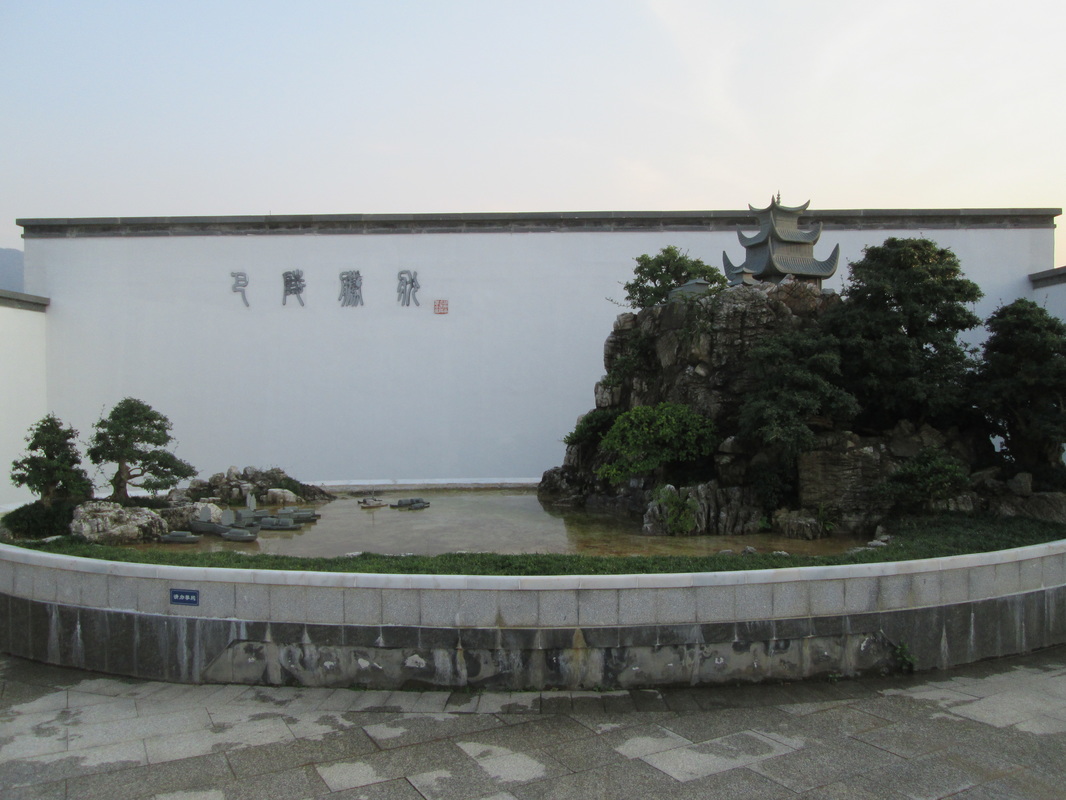
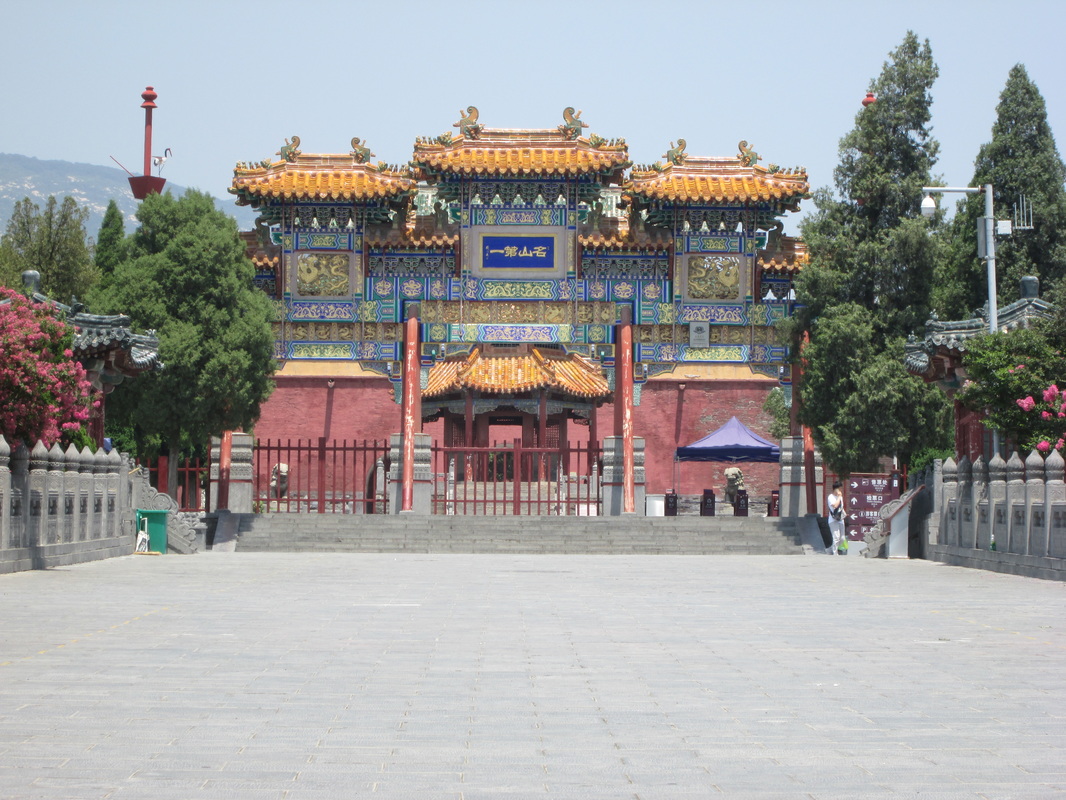
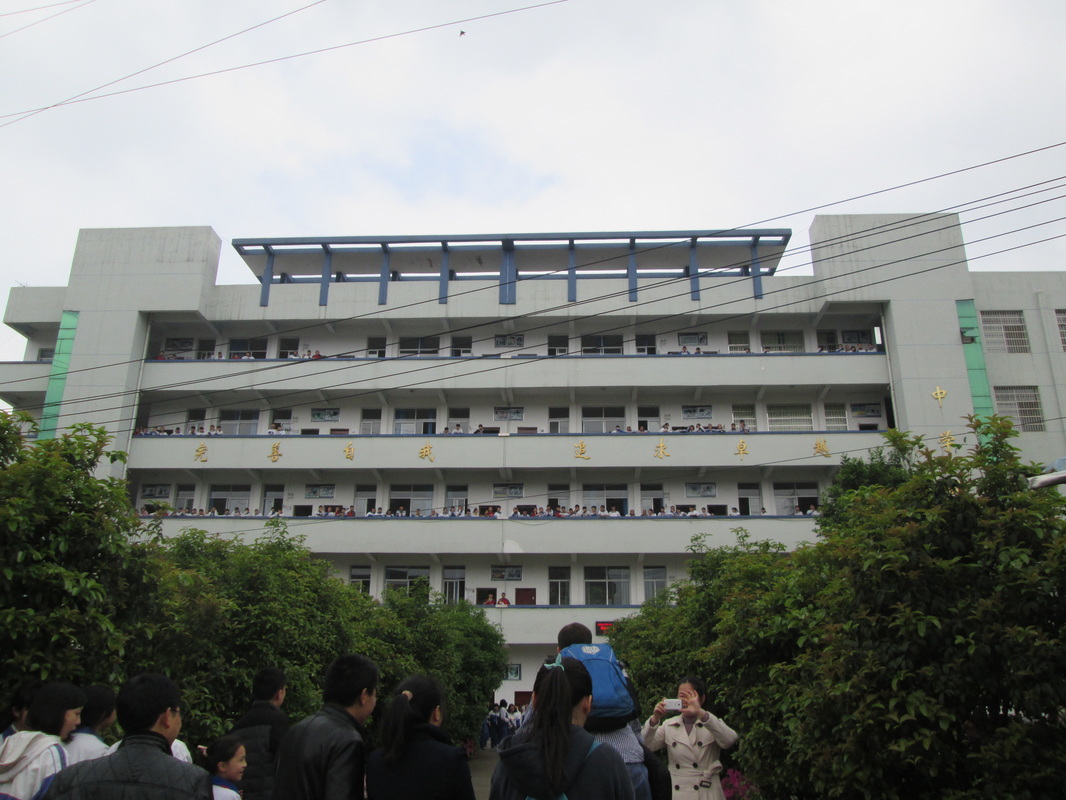
I finally made my way to Yanling with a group of other foreign teachers who teach in Zhuzhou. Every year, the city puts on a few events where foreign teachers go to teach at a school where students do not have a foreign teacher leading an oral English class for a day. This year was the first time they did an overnight trip. We went sightseeing for half a day in Yanling and taught classes the next morning after the opening ceremony and requisite speeches and photos. I was excited to see Emperor Yan's mausoleum, though being the important figure he is I doubt that this is the only place with claims to him.
Picture
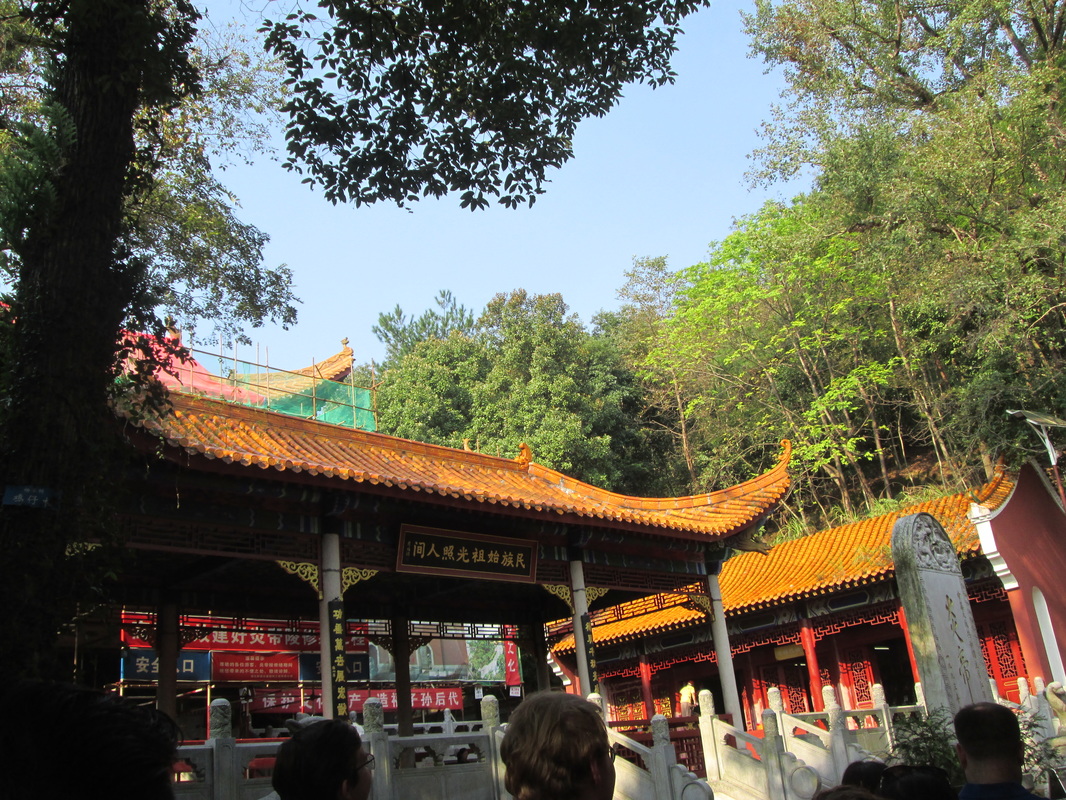
Entrance to Yandiling, Emperor Yan's mausoleum
Picture
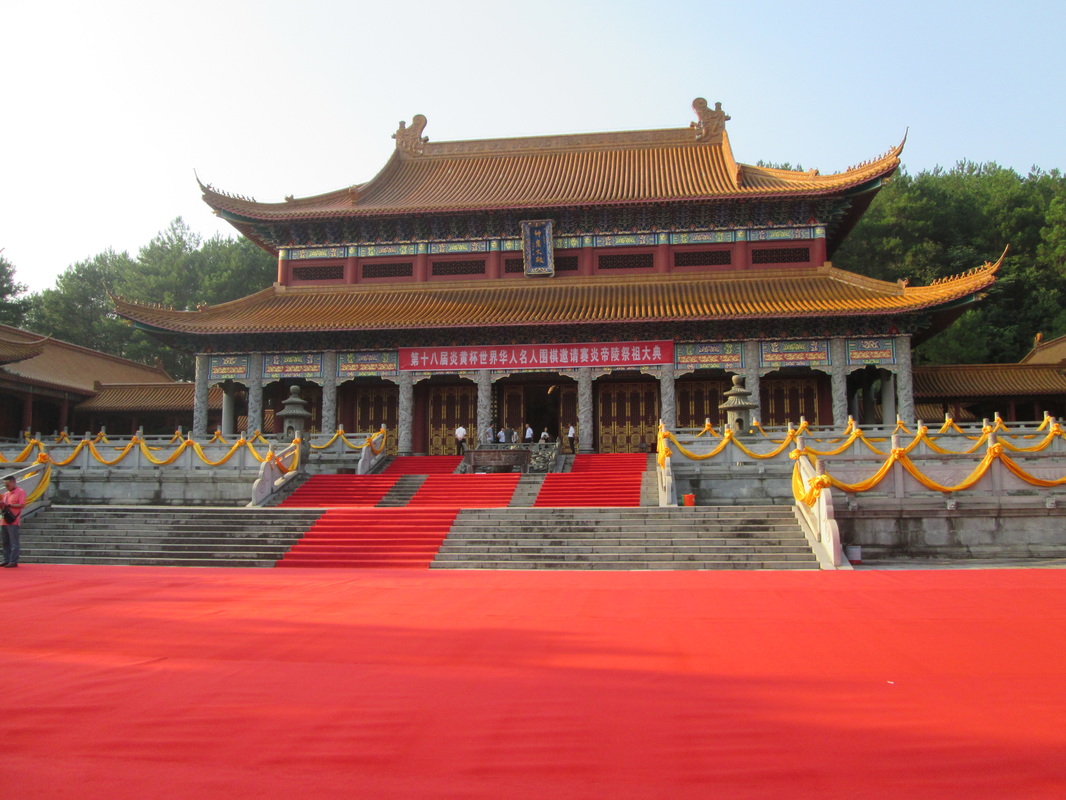
Large temple dedicated to Yandi
Picture
One of many miniatures in a garden
None of it looked very old, but that's not so strange here despite China's 5,000 years of history and culture. For one, wooden buildings require more maintenance than other materials and the Cultural Revolution has also taken its toll. The reconstruction, rebuilding, and refurbishing that comes with old sites in China is a product of history in its own way. Yet Chinese culture seems to find a way to make its comeback. Emperor Yan/Shennong is still an important figure as the one who brought agriculture, pharmacological knowledge (via trying plants out on himself), and the use of tea as medicine to China. As in Zhuzhou, there were many images of him with grains or plant life, though in the temple his accomplishments seemed to further include music and pottery. Perhaps it's the way he's carved into the walls that remind me of red and black Greek pottery scenes or that his name "Yan Di" means "Flame Emperor" but I often find myself thinking of him as something like a Prometheus figure lately. An ancient figure who brings key developments and knowledge to a civilization that radically changes things for thousands of years.

Being the town where Emperor Yan's bones are kept, Yanling had appropriately agrarian names throughout. Our super fancy hotel (I guess the combination of city officials and foreign guests made it impossible for the organizers to look for anything less than Yanling's best) was on a road that ran next the "Mi Xiang", "Rice River". When a couple of foreign teachers and I went out for a walk with a local teacher in the evening, she explained that the name came from the color of the water which resembled water after it's been used to wash rice. There was also a small market on a dirt lot nearby our hotel too which looked like it was selling local grown snacks. All in all, it was a good time. The fresh air was a welcome change, Yanling was pleasant, and students were slow to warm but full of questions.

I also had the opportunity to pop in and say hi to some of my former students when their school held a sports day on our school's large field. Last year, each class was asked to dress in the national costume of a different country. This year, they were asked to dress as different minority groups of China. As someone who grew up in the American racial context and has a background in liberal arts, I do find it problematic though I realize too that for my students it's just what they were asked to do for a school event. I have to admit, I was really impressed when a few of my students rode down the track on real ponies with "Kalinka" playing in the background. It was good to catch up with them and remind them to be nice to the new teacher working there this year.

Aside from school and travels, I've been sitting down to think about where to go from here. I'm not unhappy and I've grown a lot from this. Public speaking doesn't make me sick like it used to, I'm more comfortable with the idea that it's OK for me to take up space and make noise as much as anyone else in this world. Teaching here the past few years has helped me see more clearly all the ways in which my lack of confidence has really affected me. When you're leading a classroom, you really have to remember your power as a teacher which is something I've struggled with at times as someone who generally has been most comfortable at the back of the room or as someone who would rather write an essay than stand and speak in front of a room of people. Which is partly why I came. China could continue to offer challenges, but because I'm finding I'm more capable than I gave myself credit for I can't help asking myself: "What else could I try?"

As it stands now, I have a list on the fridge of things that have crossed my mind in further studies and other lines of work. I've also started up a notebook with little tabs as I dig into these things further and ask myself what it is about these things that appeal to me and what I might contribute in the future as a result of these decisions. There is, admittedly, the part of me that continues to feel rather lost and think "Whatever it is, it's a life" but I'm coming to better accept that lost is everyone's condition to some degree. Just keep moving. No promises any which way, but it's something. The weather is cooling off so I suppose I'll have time to sit down with a hot cup of Tie Guan Yin/ hot chocolate/instant coffee/Earl Grey and mull it over during the coming months. I've also got a few China related goals like building up my Chinese since I got lazy last year and paying a visit to Hangzhou, Taipei, Putuoshan, and a few other places. I wouldn't mind trying to find my way to Taishan either.

I've been reading more China travel books lately. I finished Ella Maillart's "The Forbidden Journey", which was already really interesting as an account of traveling around 1930's China from Beijing to Kashmir but especially so for Maillart's rather anthropological attention to the people she meets and the things she sees. Her travel companion, Peter Fleming, wrote a book of his own which is stylistically quite different. Where Maillart was happy to stay a few extra days and look around, Fleming largely wanted to be on the move. Fleming's writing, I can't help noticing, is brisk and exciting but since I read Maillart first I can't help feeling it's short on detail (but as someone who has taken a number of writing classes and learned the importance of writing what is needed and no more, it's not a move I necessarily find wrong, it just takes some adjustment). I grouch about 30 hours on a slow train from Hunan to Sichuan, while those two made it across the country with train, camel, horse, and cart. Strangely, even from this distance about 80 years later there are some things that are painfully familiar as a traveler in China. I've also decided to come back and finish the last third of Marco Polo. I had to put it down because I was sick of reading the same opening line about Saracens and Moslems over and over again and how many places seem to have a tradition of letting guests from far away sleep with their women. Still, I can't help seeing it as something of an ur-text for those who travel and write about China and it has been pretty interesting to slowly work through all these layers of China books from Marco Polo to Ella Maillart to Paul Theroux to Peter Hessler to Jen Lin-Liu and other more contemporary writers. A different little slice of life in this country in different periods. I think of the 10 different layers you can see when you go to visit the site where Troy used to stand, but I'm creating it through travel accounts inside my head instead.
0 Comments

Henan: A week of buses, Buddhas, and one black cab (long post)

7/31/2016

0 Comments

 
Picture
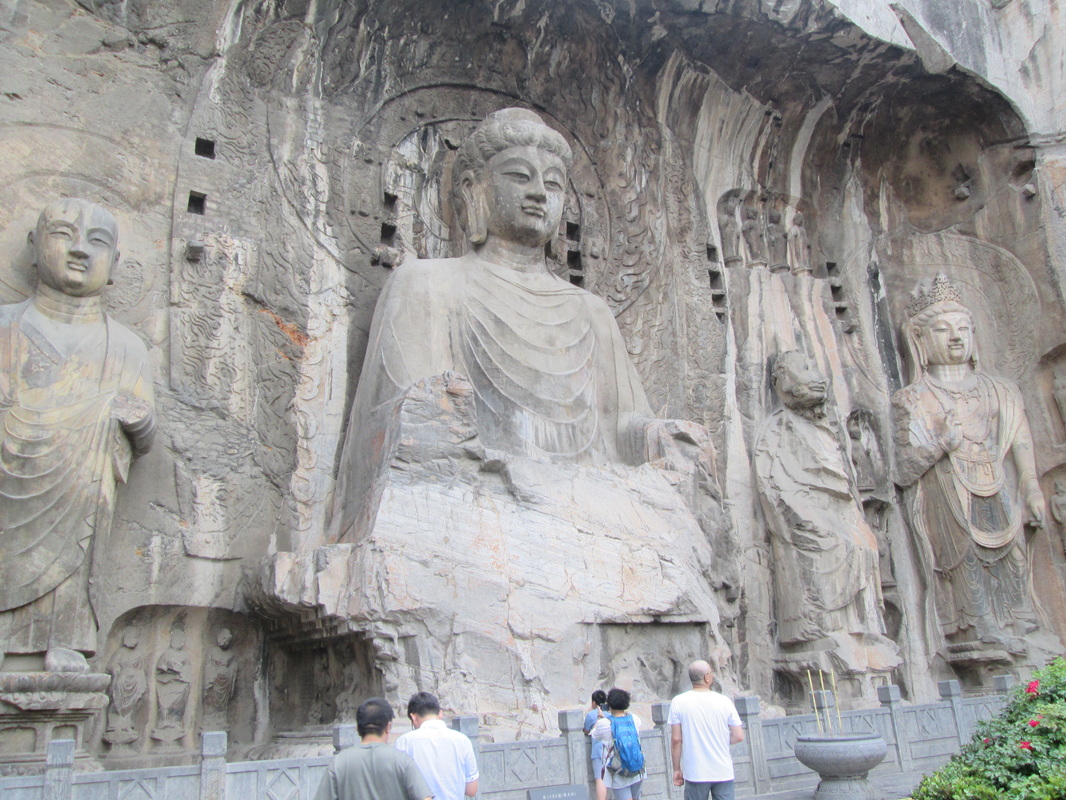
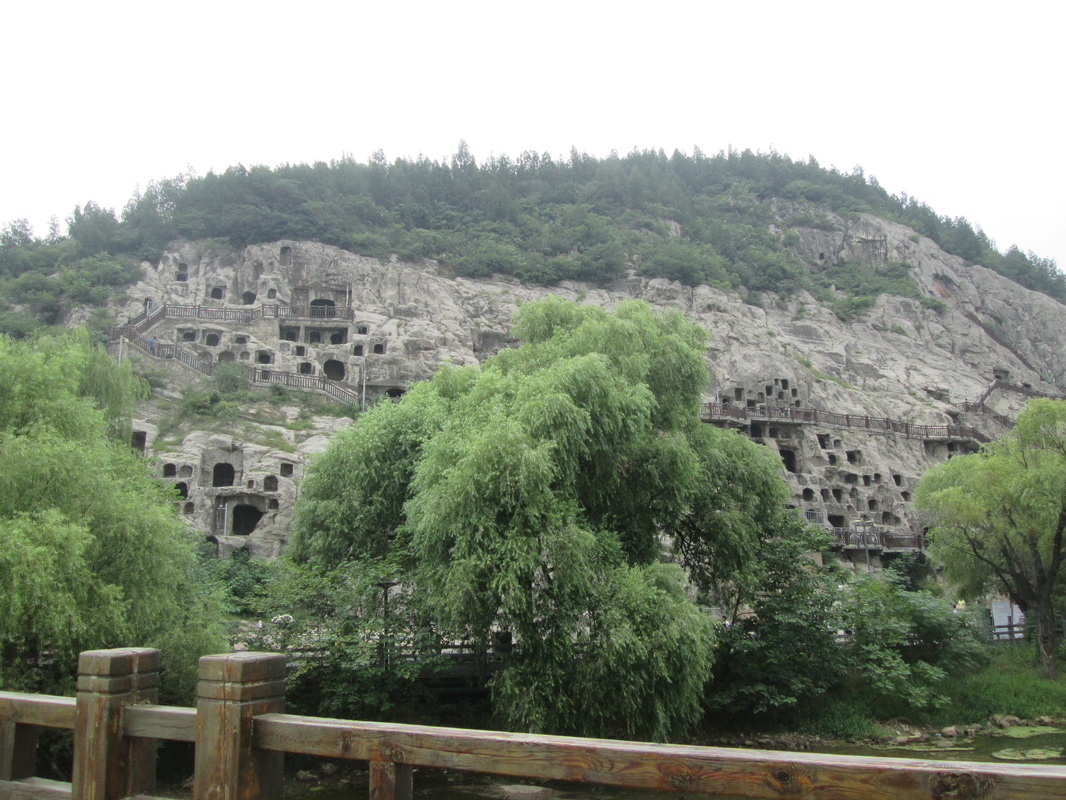
Buddhas big, Buddhas small, Buddhas big and Buddhas tall, you want Buddhas we've got them all
at the Longmen caves!


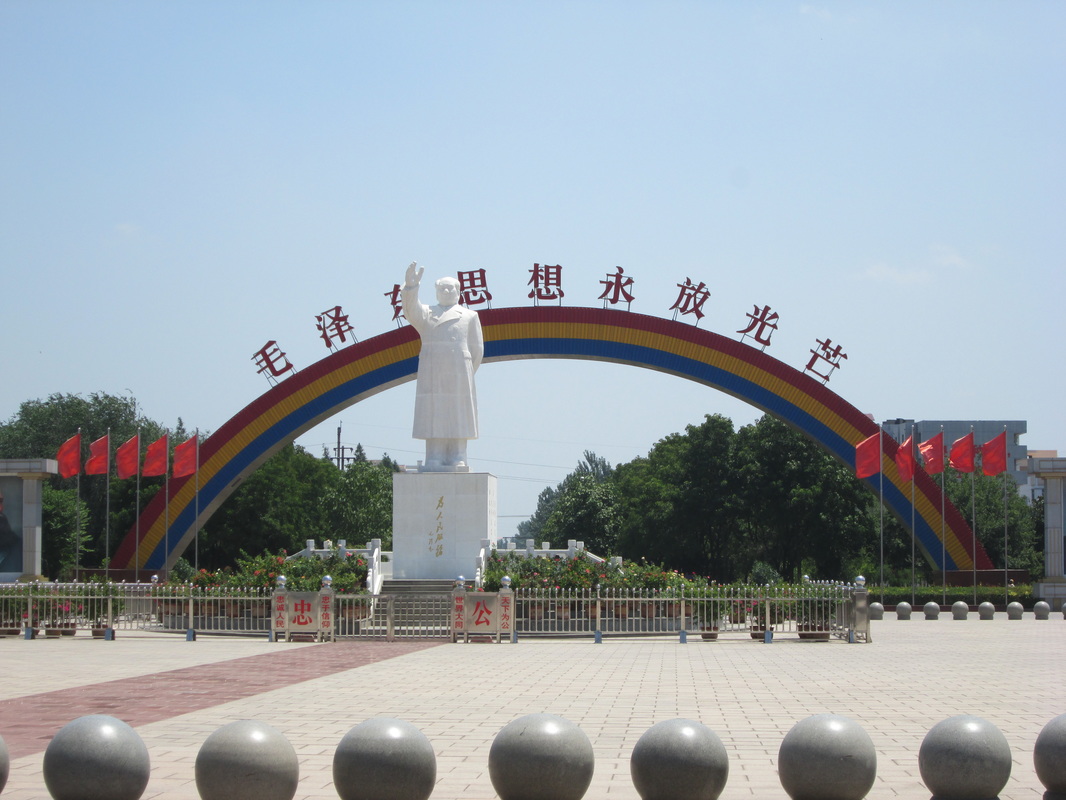
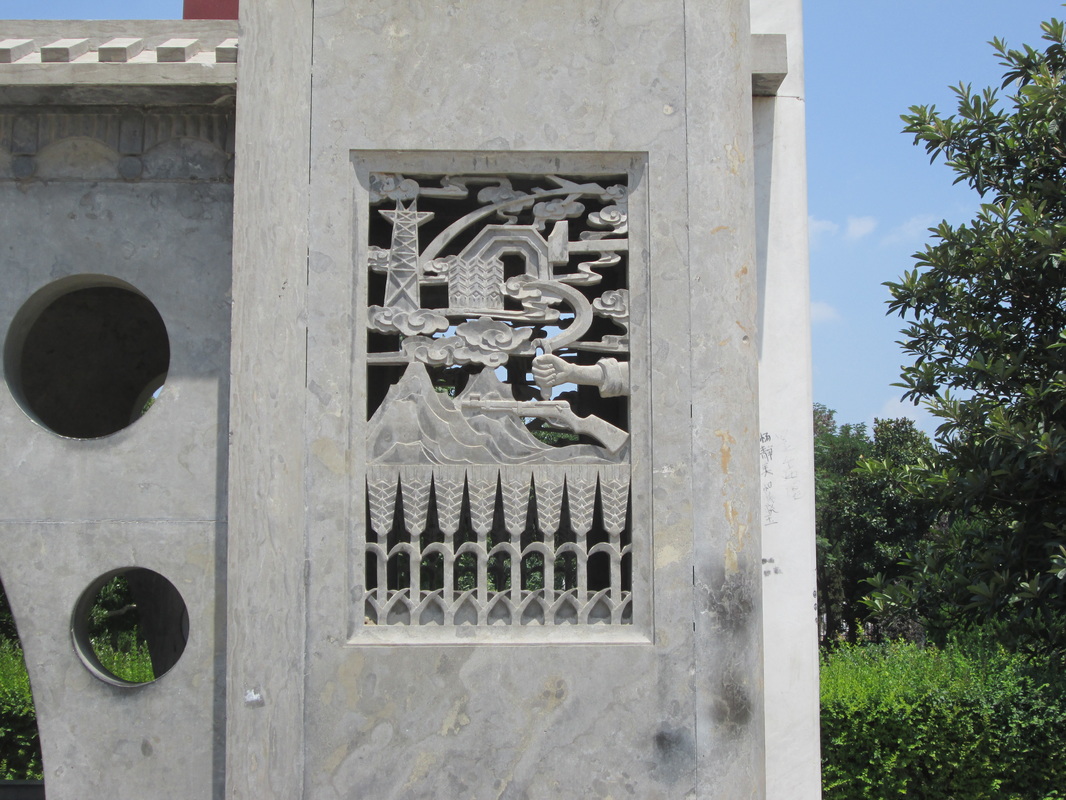
Although the Longmen caves were not my only stop during my week in Henan province, this thought has certainly crossed my mind in view of many places I visited there. The Longmen caves (of which you can see a small section above), Shaolin temple, Zhongyue temple, Kaifeng with its silk road and imperial history...well, maybe not Nanjiecun where I started my week in Henan. Said to be the last Maoist collective in China the images decorating the streets and the parks are those celebrating the working man, Mao, Marx, Engels, Stalin, and Lenin. It was very quiet and clean. And very empty when I wandered through. There's a guided tour but it's all in Chinese and I don't think my Chinese is good enough to justify an 80 yuan tour I can't completely understand. After nearly 2 hours I made my way to the bus station to get to Zhengzhou.
Picture
Dongfang Guangchang (East is Red Square) in Nanjiecun, said to be the last Maoist collective in China. Not seen in this picture: portraits of Marx, Engels, Lenin, and Stalin.
Picture
​Henan was relatively easy to get around by bus so that's largely how I got around with the exception of getting lost on the edge of Zhengzhou after (I think) I got on a bus from Nanjiecun going in the right direction but at the wrong time so it didn't go to the city center. After one anxiety-ridden black cab ride I didn't really want to take but kind of got hustled into while trying to find my way to the main bus station, some misunderstandings and crying, I arrived in Kaifeng 500 yuan lighter than I had planned for. I still hate myself for that. There was one point in the trip where we had to stop for gas and he said "Ni jia you wo" (Roughly, "You add gas for me") and I got ticked off because I thought he was demanding I get out and gas his car for him after I already gave him hundreds. I told I him "I already gave you money" and then he made the comment repeatedly that "Ni gei wo qian. yi bai..." and I started to get really angry and anxious. I didn't hear him add a "le" that would have told me he was saying I gave him money and that he used 100 to gas up, so I thought he was speaking in the present tense. I got pretty pissed off that this guy would just keep asking me for money after asking me for so much when I was stuck and I screamed in English "Fine! I'll go!" and began plotting when the best time to open the door and run out would be. Then I screamed "Wo gei le si bai!" (I gave you 400!) and started crying instead. Then he sounded upset as he said "Ni bu dong wo de yisi!" (You don't understand my meaning) and proceeded to tell me off for being a 24 year old woman and crying. It turns out he was just saying that the money I gave him was going to pay for his gas but between my mediocre Chinese and his accent I interpreted wrongly. He kept telling me there was no need to cry and I flat out refused to answer or respond and told him I didn't want any tissues thank you very much. After over an hour of playing out all the ways this kind of thing goes wrong in my head, Kaifeng greeted us with some fake towers. He pulled over to the side of the road, called me a cab, gave the driver 20 yuan to help me find my way and said goodbye. I felt bad, because I cried and had been rude and he had turned out to be honest and got me to Kaifeng. Then I realized if he was actually honest, he would have returned the money I had used when trying to get on a bus back in Zhengzhou that was supposed to go to city center and would have let me pay 25 yuan for a bus ticket instead of taking 500 and looking at me in disbelief when I said I didn't have that much cash in my wallet (and of course, this argument taking place on the side of a freeway). I didn't feel as bad when I realized that I was just fast money to some guy with long nails and too many questions on the edge of Zhengzhou. Then it got funny because either he had to leave me with a taxi because he didn't know Kaifeng well or I scared him pretty bad by screaming and crying. I don't think he understood that I didn't understand everything he was saying until that outburst. So there I was anxious for over an hour while this guy probably didn't know what to do with some wailing laowai in the passenger's seat. I still feel kind of bad about that...
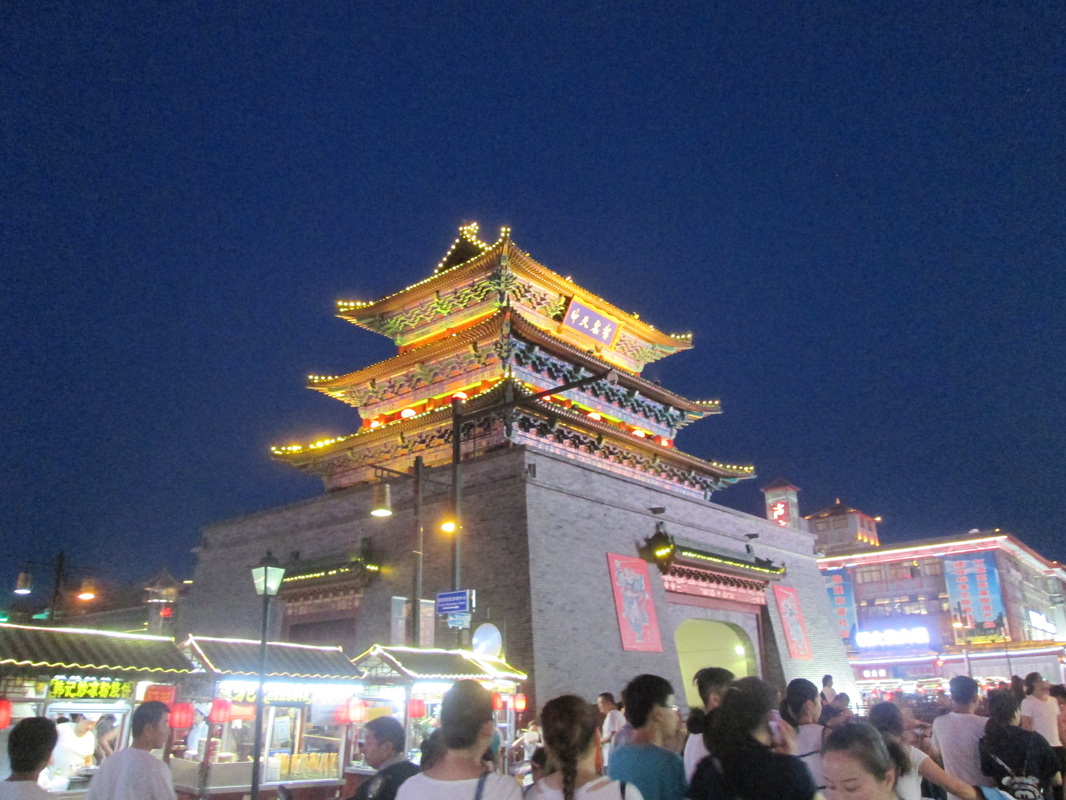
After that madness, Kaifeng was probably my favorite out of the places I went too. I was a little outside of the city walls, which was inconvenient only because I insisted on going everywhere by foot. The walk itself wasn't bad, but the heat was and I've come back from Henan noticeably tanner from being out in the sun so much. The main street, Gulou jie, was very pretty at night and it was hard to walk with all the street food booths and tables out at night.
Picture
Kaifeng was actually my main motivation in coming out to Henan. First as the capital of the Northern Song dynasty but in flipping through a guidebook I'd also seen a note about a Jewish community that established itself in Kaifeng reaching back to the silk road. Though there's not much of a strong community today after China's changing winds, intermarriage, and as with many, incentive to go to bigger wealthier cities has dispersed China's Jewish people. Some families didn't tell their children or openly practice either so it's likely a number of people don't know if they have Jewish ancestry. I did find that there was one family still living near the site of where the synagogue used to be located and that there was a guide who spoke English and could provide information about the Kaifeng Jews. In walking down Gulou jie and walking onto Shudian Lu before making my way towards the hutongs and the former site of the synagogue, it became clear that Kaifeng didn't have money to go around quite like Beijing, Shanghai, or even Xi'An where people go to see the terra cotta warriors. The bright lights, modern shopping malls, lines of food carts, underground walkways gave way to pavement and stores more geared to necessities than brand names or slick posters. I did see a few things under construction and in progress while wandering, but the money and lights seemed pretty heavily concentrated into one space.

I arrived early to meet my guide and wandered around her neighborhood for a bit. All throughout the city, there are signs advertising halal food and it seems that the Muslim community is still pretty sizeable. One door surprised me by having a red paper square turned on its point and except for the Arabic writing, looking like any other kind of new year decoration. In a nod to the no longer standing synagogue, alleys have names like "Teaching the Torah Alley". Crawling around "Teaching the Torah Alley" brought me to a mosque that looked more like it was used for living than prayers, though one room was free of laundry or furniture which lead me to believe it was still in use. The hutongs were of course narrow, the living space looked a little tight, it was a bit dusty and dirty and I saw a few woks and pots set on what looked like old brick or mud stoves. When I passed some of the hutongs I was startled to find a big white Catholic church that looked rather pristine and recent. It was certainly a neighborhood with character and I liked it a lot, but that's easy for me to say as a traveler. I hesitate to romanticize when I sense that it wasn't the poorest part of town (no one was starving or begging or struck me as desperate), but neither was it the wealthiest. My guide later told me that part of the mix I saw was because the foreigners from the silk road lived together in one part of the city and that a Catholic group in communication with the Jewish community had built the church. I can honestly say I've never been to a corner of China quite like it. I made my way back downtown where I visited Da Xiang Guo Si, a large Buddhist temple. I normally really enjoy temples and taking time to study all the different details but this time I just kind of wandered and didn't really look. I saw nothing of the big thousand armed Guanyin so I missed out big time or timed things badly. But in the following days I'd make up for it in sheer number of Buddhas seen in the course of a day at the Longmen caves.

After Kaifeng, I made my way to Luoyang. Luoyang is also a key city in Chinese history but it hasn't retained much of its imperial structures (though the city museum has some really cool things). I should have taken the time to see more, but most of my time was spent at the Longmen caves. I had my fill of Buddhist art, paid a visit to the poet Bai Juyi, and then began to make the trip towards Dengfeng where I planned to stay for three nights and explore the area after seeing Shaolin temple.
Picture
 I had something of a strange greeting at Dengfeng and the hostel overall seemed safe and the staff was friendly, but it was sort of weird too. I had a moment at the bus station where I was trying to convey where I was a going and a man told me it was going to cost 30 yuan for a ride. I'd read that it should only cost 7 yuan, so I kept insisting otherwise but he seemed firm. I started going with him, worried that after working so hard to convey what I wanted it would be rude to step out of things. Then I heard one of the other guys laughing and I turned around and glared. He waved and told me to go. I began to realize that if someone is ripping you off, you actually may not owe them anything and wound up leaving him and asking one of the cab drivers. The driver wouldn't turn on the meter and charged me 15. Not 7, but not 30 either. (30 is the flat rate that all drivers charge for going to Shaolin temple from Dengfeng, but I was trying to find my room in Dengfeng and felt it was ridiculous to get the same rate I would have for going out of town.) Losing that 500 yuan on the way to Kaifeng really hurt and made me realize I waste too much energy believing that people will compromise and respond well to politeness. There's nothing wrong with saying "That's not what I want" and walking the other way or not responding at all. I've been kicking myself lately for all the times I've struggled to say "no" to people who honestly don't deserve any other response (ie, some guy touching me in a Swiss train station talking about how much he misses his good obedient Japanese girlfriend and asking about my virginity, I'm getting frustrated with how I'm running out of ways to politely suggest I'm not interested when I should really be screaming "NO"). It's not selfish or rude. It's assertiveness and looking after myself. I can't believe I still have to work at fighting off that part of myself. I have to admit, one of the joys of learning tai chi this year has been tui shou. For an hour or two, my teacher gives me permission to and asks me to push him or throw him. It's better than being passive aggressive, it's really fun, and I guess it's one way I've begun to quietly assert myself.

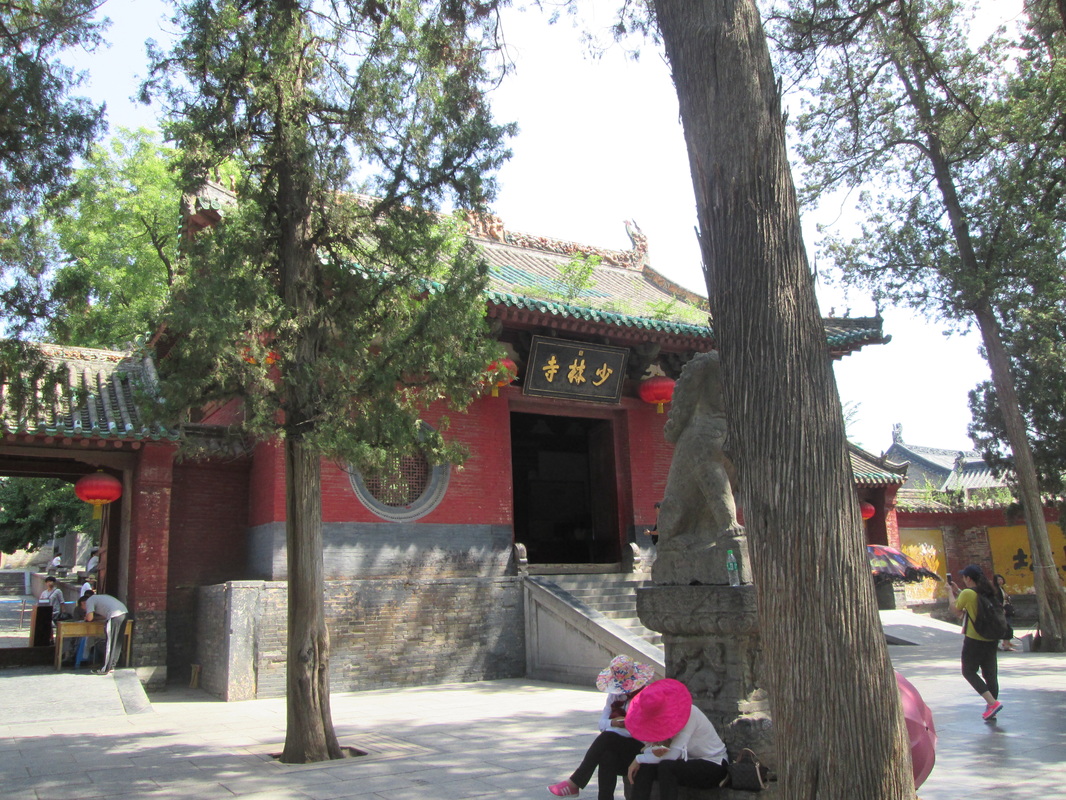
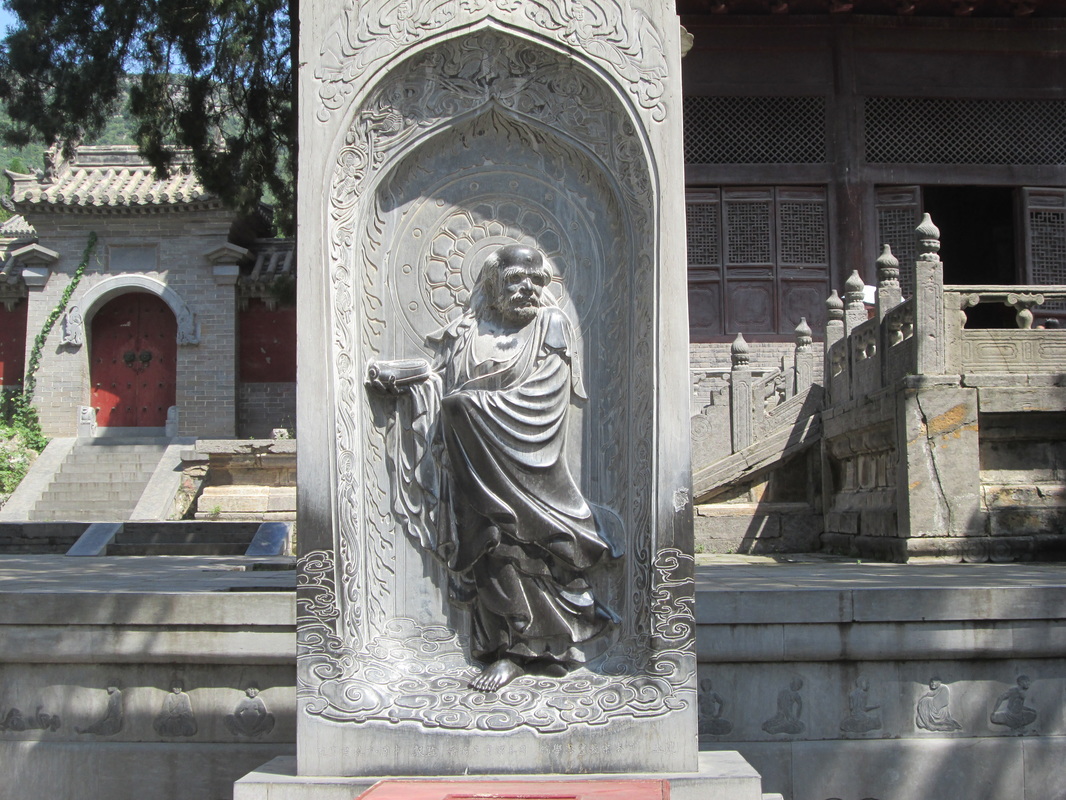
As someone who's spent some time nerding out over the philosophical side of China's martial arts, I was excited to finally be at Shaolin temple as not only a sightseer, but as someone who now had some experience in a martial art. I wanted to see what I'd pick up on in Shaolin that differed from what I learned with tai chi. I also really love images of Bodhidharma/Damo, the monk said to have meditated in a cave above Shaolin for 9 years and have developed exercises for the Shaolin monks who were a little out of shape after largely focusing on spiritual matters. He came to China from India as a result, has a very distinct visage as tends to happen with foreigners in Chinese art. You'll find him around Chan/Zen temples throughout China.
Picture
Picture
Bodhidharma, "Damo" in Chinese, an important figure in the transmission of Zen/Chan Buddhism in China.
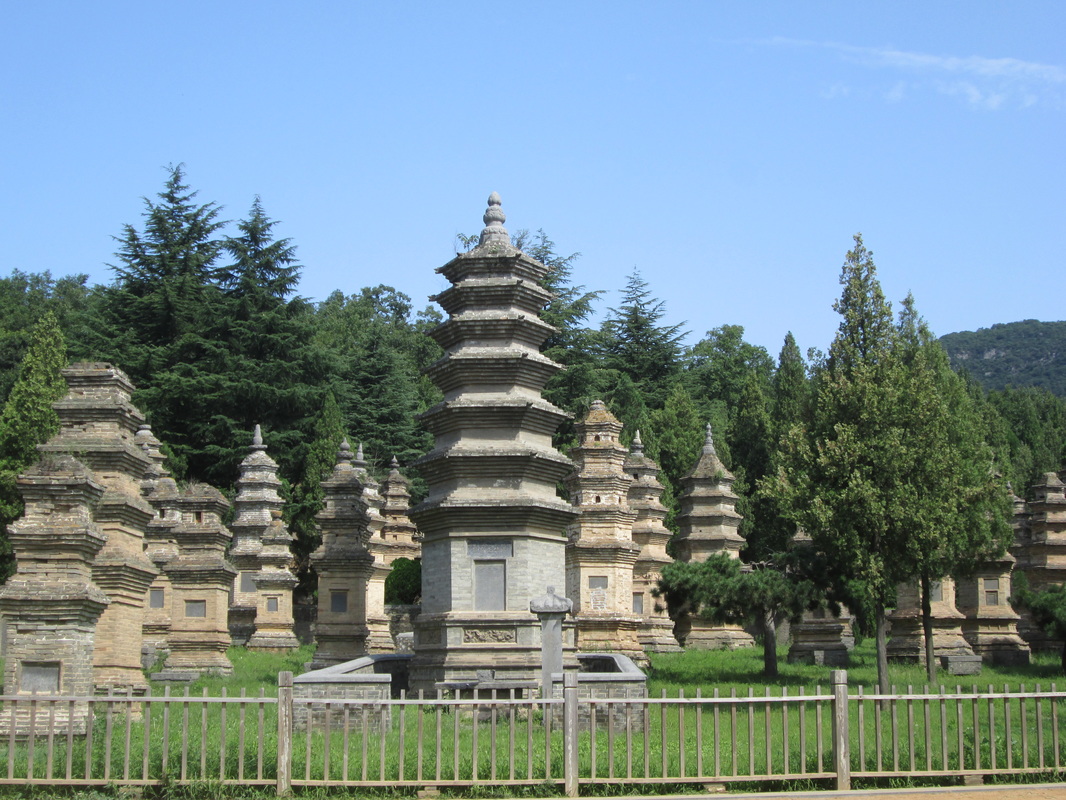
The crowds weren't as bad as I thought they would be, though there were a number of tour groups coming through, easy to see with their yellow flags and headsets which ensured everyone could hear what the guide was saying. It tended to be most packed directly in front of the temple, everything else was pretty mellow. I was surprised when I was able to walk right up to the pagoda forest and take pictures until I realized I was standing out in the sun and that all the other Chinese tourists were nearby under the trees. Pale skin is the ideal here, so most likely people were trying to avoid getting a tan (which I didn't bother thinking about while wandering around and as a result, am now in two tones, might have the second sunburn of my life, and came back to people practicing the words "Do you use sunscreen?" when they saw my face). So I had a big sunny patch all to myself to look around and take photos before moving on to some of the other sights around Songshan.
Picture
I kept looking up at a big statue of Bodhidharma a few kilometers up the hill behind Shaolin temple.  I kind of wanted to see it, but I wasn't sure what would really be waiting for me at the top other than a cave. After lunch, I decided to go for it and buy a few bottles of water for the walk up. I think the hardest part was when I got really close and asked a nun who was selling a variety of goods if I could sit for a bit and she just repeated "Wu fen zhong"(In 5 minutes) while pointing up the mountain. So I made my way up sweating and tanning as people stared and commented on the state of my face. When I did get to the cave, there wasn't much but there was a sense of peace not found below at the temple. A few of us sat down in the shade just outside of the cave and two men sat inside the dimly lit cave meditating as Bodhidharma supposedly sat there staring at a wall for 9 years. (One story has it that his eyes closed for a long period of time and to ensure that it never happened again while he was sitting there, he cut off his eyelids and they became tea leaves. The tea was useful for keeping monks awake and focused.) I took a peek inside at the pink and green lotus shaped lights and as my eyes adjusted, I was able to make out Bodhidarma's facial features rising out of the shiny yellow robe covering the rest of him. As someone who doesn't really identify with any religion, I didn't feel right stepping into the middle of the meditating men and poking around too much so I just went outside, bought another bottle of water and rested. I gave up on going all the way to the statue since the cave was my primary interest and I didn't want anymore stairs. It's been a while since I've gone on a hike. It felt really good and being surrounded by trees, rocks, and bugs was kind of like home though the obvious lack of oak trees and douglas firs combined with the humidity reminded me I was in China. When I got to the bottom, I rested some and grabbed a few things to eat. People kept asking if I was a wushu student. Maybe it's because I was a sweaty mess. There were students of all ages and all nationalities who would pop up around the area. I was surprised when I ran into a whole American family wearing the loose grey pants worn by all the monks and again when I saw two tall Americans holding weapons and posing with tourists (it looked like they lived at the temple and had been asked to do this). The idea of coming back as a student rather than a sightseer is tempting. I made my way out and picked up a few souvenirs before heading down into Dengfeng and making my way to the hostel. I wasn't sure if I'd have energy for the next day, but I figured out the buses and made my way to Zhongyue Temple and Songyan Academy (Songshan, where Shaolin is located, is actually a really important Taoist mountain and it seemed right to visit both the famous Chan/Zen temple and the Taoist temple).
Picture
Zhongyue was also a tourist site, but much less so. It was very empty, more a place of worship than a place for sightseeing but I did see a tour group on my way out and had to pay about 30 yuan for admission. People saw me alone and I felt bad turning them away when they told me I could get a tour for 20 yuan since I was alone but then I remembered that it's kind of ok to say you don't want the things you don't want. I felt a little shy about going inside the halls since people kept calling me in to pray and I don't really identify strongly with anything, so it seemed kind of wrong for me to come in and start posing (though I know China is a sort of fluid place when it comes to religion). After quietly slipping in and out and trying to politely step away from women calling me to kowtow, I went to the hall of 60 gods where people find the god of their birth year and pay their respects. A woman working there followed me in, told me to get down and pay my respects to Buddha and the god for 1991 (and other years, the traditional Chinese calendar has 12 animals for each year as many know and in addition to this, there are 5 elements, so 60 years makes a full cycle and that's why they had 60 instead of 12 gods). I had to pay 10 yuan for a charm that I put in my wallet too. I walked away trying to figure out if it was super disrespectful for me to not pay my respects to all the other main gods or wrong for me go through these rites without any claim to Taoism aside from practicing Tai Chi. I finally decided that the temple probably needed the money to support itself and if nothing else, I was helping the temple with my small contribution. It was a really nice temple, older than many I had seen and I studied the peeling paint and designs that told me they either didn't have the money to restore or had managed to preserve a lot. In one hall, there were 4 impressive figures, all carved out of wood and elegantly dressed. One was an emperor, as indicated by his bright robes, one was a concubine (and she had a beautiful headdress with wooden pearls hanging in front of her face), and there was an elegantly dressed girl on either side of the pair. They were smaller, so my guess is they were serving the much larger two in the middle. In the courtyard, there were some metal soldiers dating to the Song dynasty. Aside from visitors, guides (most of whom were sitting and talking without much to do), and myself, there were men with top knots quietly watching over the halls, altars, and the fires that burned for offerings. It was quite a contrast to the crowds and shops at Shaolin.

I made my way back to Zhengzhou to catch the train to Zhuzhou with my charm from Zhongyue in my wallet and another charm from Shaolin, feeling confident that I'd make my way home without issue (and except for the train running an hour late, I did). It's not really my style to speed through a place, but in order to get a little sightseeing in this summer after waiting for my visa and still squeeze in time to go home before school starts again I didn't have much of a choice. Thanks for sticking it out with me this far into a long post. This week was a little wild at times, but it taught me something important about asserting myself and saying "no" in between letting my nerd self indulge in old capitals and temples and learning about Henan's unique place in Chinese culture. And at the other end of things, Nanjiecun's focus on the working man over gods. It was a satisfying week and now I'm happily looking forward to two weeks back in the mountains where I grew up before getting into another school year and more China adventures. Till next post!
0 Comments

Xi'An

6/13/2016

17 Comments

 
With the year closing up and my departure for the summer approaching, I find that as I write this post about the last stop I made (somewhat on an impulse) I'm also thinking of California and how I learned to situate where I came from in relation to the rest of the world. In part, this is because I feel that Xi'An doesn't get the recognition you might expect for a city that's been the capital many times over and situated by the famous terra cotta warriors. On the Mutianyu section of the Great Wall, someone mentioned the terra cotta warriors, someone else asked where they were located, and then I was asked if I knew how long it took to get there by plane (I had no idea). When I first arrived in Lugano, the natural question all the students would ask each other was "Where are you from?". I quickly learned that "Saratoga" or "Santa Cruz mountains" doesn't ring bells too often, but that "San Francisco" or "Bay Area" were good points of reference. Once, a classmate surprised me when I mentioned that I was from around Silicon Valley and he mentioned Cupertino. It turned out that when he got his iPod, the clock/timezone was set to Cupertino and he'd always assumed that Apple was located there. (1 Infinite Loop!)

Anyway, I'd really been looking forward to Xi'An. I wasted a year telling myself I'd go and finally reasoned with myself that a 20 hour train ride back to Zhuzhou was worth it. Any memories should outlast a 20 hour train.I was on major nerd mode thinking about everything in the area: Wu Zetian's intact tomb (the sole woman in all of Chinese history to actually take on the title of Emperor for herself and currently subject of an expensive drama starring Fan Bing Bing), Qin ShiHuangDi sealed up under a hill with his mercury rivers and supposed model empire (tomb to be opened in 20 years, not sure what they'll do about the mercury), Ming dynasty walls, the Muslim quarter and its beautiful mosque (so different from what I've seen in Turkey or Morocco), and the endless supply of lamb. The Tang dynasty is at times referred to as a golden age of Chinese arts and culture, something tourism certainly tried to capitalize on with Tang dynasty shows and trinkets all around, but I spent more time dreaming on than shopping. This was the city that Kyoto, the old capital of Japan, was based upon, where the Qin emperor who gave his name to China was buried, where Yang Guifei distracted the emperor from his duties, a key point on the silk road, a city with Ming dynasty walls and a subway system. I only had a few days before running back to Zhuzhou. I hated that I couldn't do it all, but I wasted a year trying to find an entire free week to see it all and I would have kicked myself for not going after two years. 
Picture
Picture
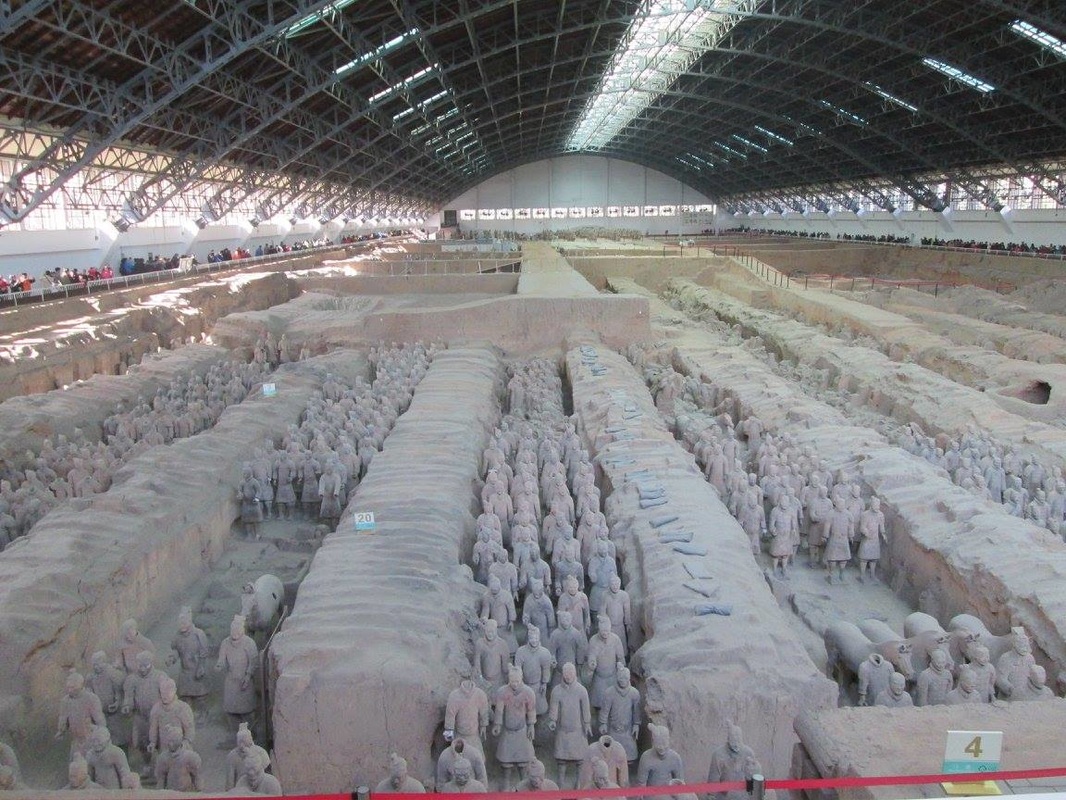
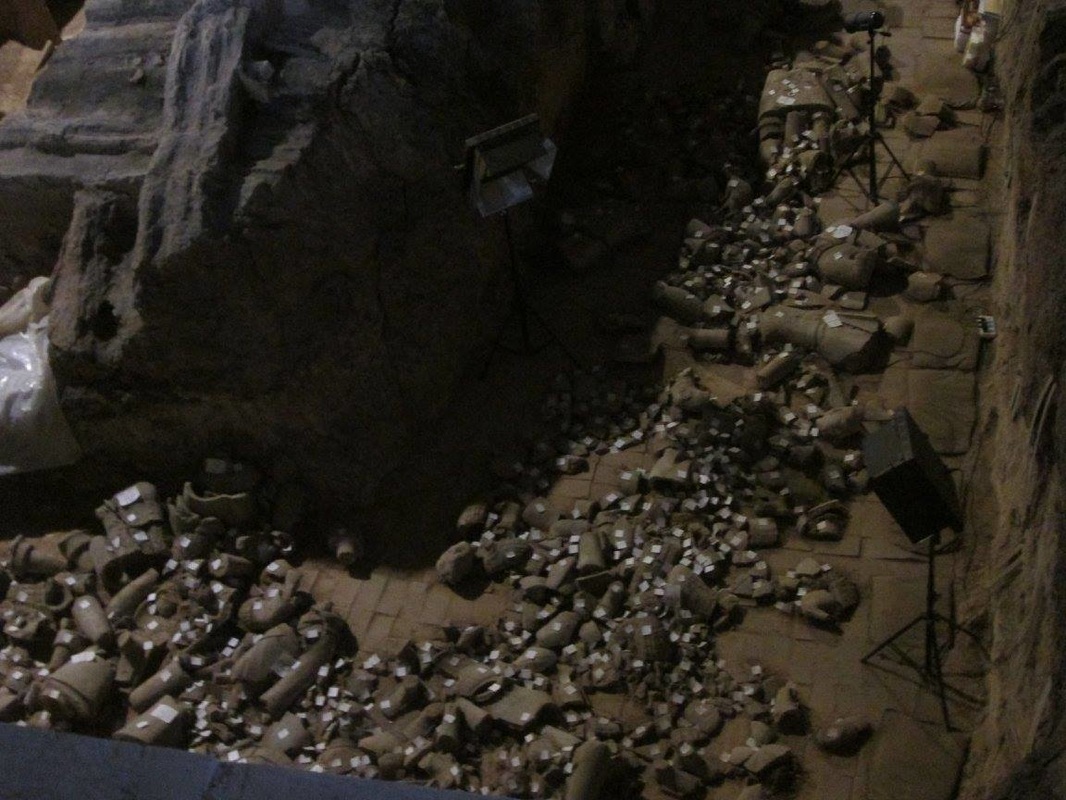
I went with a group arranged by the hostel I was staying at. I generally prefer to go on my own time, but in this case I didn't want to lose a day by trying to figure out buses and other things on my own. As we wandered from through the 3 pits that they've opened, I found myself trying to grasp the scale of it all. Sometimes I wonder if the special place numbers seem to have in Chinese culture isn't partly trying to navigate such a big place with so many people and so much history. As I was preparing to come to China last year, a lot of people said "China is going to be the opposite of nice clean Switzerland". They talked about the cleanliness of the streets and the things that are done just so. But for me, it's scale. I looked at all the little labels on pieces of shattered clay men and thought of "Ozymandias": "Look on my works ye mighty and weep". When I look at those labels and think of the archaeologists coming in to work after the tourists have gone for the day, it seems fitting. Ozymandias is about the fall of empires and the emptiness of those words in the desert, but I could see the Qin emperor shouting that line at the ones who dig, sort, clean, and label the things they find around his tomb. His daily dose of mercury cost him the immortality it was supposed to give him, but in death all these years later he is not alone or forgotten.


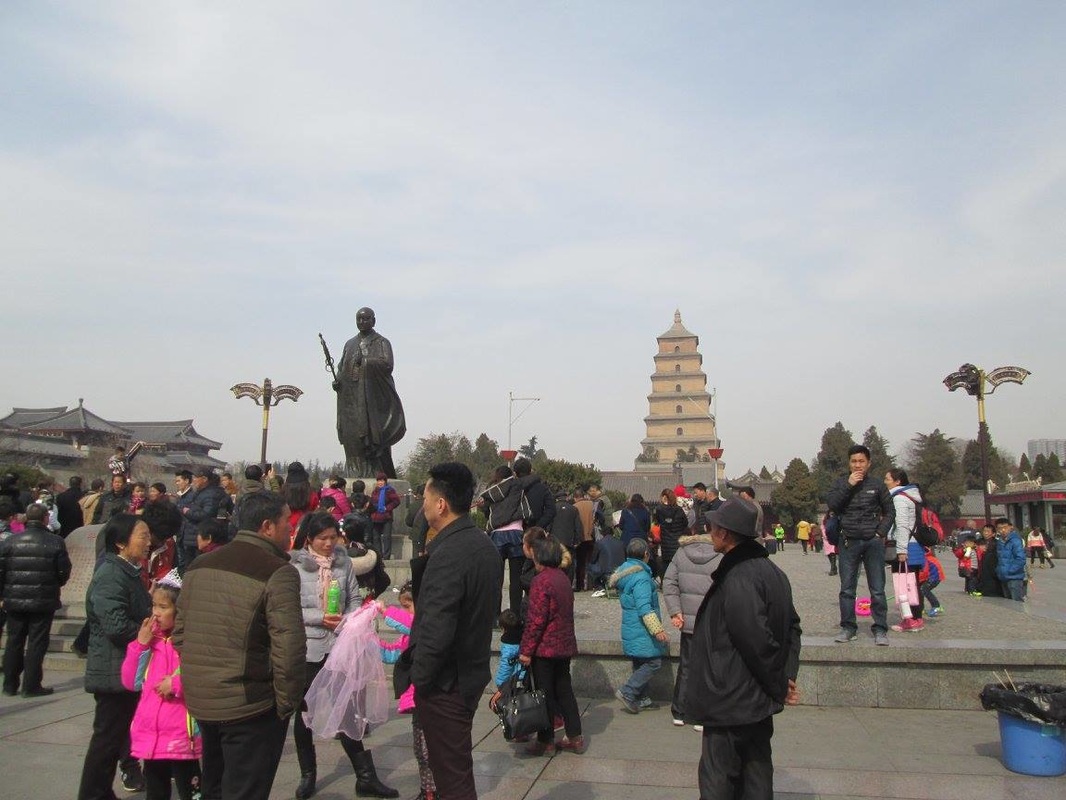
After making the obligatory stop to the terra cotta warriors, I paid a visit to the Big Goose Pagoda where Tripitaka translated the things he brought back from the West. "Journey to the West" was one of the books we read during my freshman year of college, though it was the Arthur Waley translation titled "Monkey". I loved digging through the notes and understanding what conventions Wu Cheng En was making fun of. It seemed fitting that I had come to Xi'An during the year of the monkey, though the pagoda and surrounding temple had little about monkeys. It was really about the scrolls and Tripitaka/Xuan Zang's journey. I also couldn't help thinking about the previous year when Modi paid a visit. The ties with Xuan Zang going to India and coming back to China were obvious enough, but I've also heard rumors that Modi's hometown is somewhere near where Tripitaka visited.
Picture
Tripitaka has inspired others before me to travel, I felt a thrill of pleasure while reading Ella Maillart's "The Cruel Way" and Peter Hopkirk's "Foreign Devils on the Silk Road" and finding how many others I'm connected to through this man's 17 year journey. The Monkey King tends to steal the show in the story "Journey to the West", but I've been learning to appreciate the flesh and blood man who set out on that journey.

Xi'An ultimately seemed like a place where a lot of things I'd seen or picked up on or read about came together and I sorely wish I'd had more than 4 days at the end of break to take things in. Perhaps I will go back someday and visit Wu Zetian's tomb and the springs where Yang Guifei is said to have ruined the emperor and weakened the Tang dynasty. So many powers, so many stories. With the conclusion of my spring festival travels, I resolved that the next round should help me finish off the capitals seeing as thus far I've made my way to Beijing, Nanjing, and Xi'An. Hangzhou and Luoyang stand out as the next big places, and thankfully for me, Henan province where Luoyang is located is also home to Shaolin Temple and Kaifeng (a little pocket of Jewish history in China). Go north (and west)!
17 Comments

Hanoi

3/20/2016

0 Comments

 
Hello! I've been away for a bit with school and all but I haven't forgotten this blog. Spring has come to Zhuzhou, things are in bloom and it's beginning to get warm. The countdown to the zhongkao has begun and there are signs everywhere telling students how long they have until the big high school entrance/placement exam. In the meantime, I've been fighting off the urge to dream about other things and other places as I figure out where to go from here and remember I have a job to do. I saw something listed for an English and Spanish teacher in Foshan, and I have to keep asking myself if I'd be in China to teach again or if it's less about teaching than it is about travel. I'm thinking of going to western Hunan for the next break I have and seeing Fenghuang and Zhangjiajie. On a more extended break, I might be interested in Henan province and checking out one of the tai chi schools where you can stay and train for a month. But back to spring festival:

Hanoi surprised me. I realize that since I was only in Hanoi when I was in Vietnam my observations are limited but I wasn't expecting it to be as open as it was. One of my guidebooks told me to get a VPN for things like facebook, but no one needed it and facebook wasn't blocked at all. I ran into a number of tourists from America and Europe as well as backpackers with dreads. Aside from pho and banh mi, I honestly didn't know much about Vietnam but listening to some of the people around I sensed that I wasn't alone. When I visited Hoa Lo prison, it was pretty empty throughout. The exhibits related to when it was a French prison holding Vietnamese prisoners were quiet. There was a middle aged American couple ahead of me in one room filled with shackled mannequins and I was surprised and kind of embarrassed when they stopped for a photo with all the fake prisoners. I was completely alone in another exhibit with sensors so that patriotic music followed me everywhere as I read about independence. When I got towards the end where they had things about war with America and John McCain's flight suit on display, I was surprised to suddenly find myself surrounded by people. A video played in one room, with footage very purposefully put together as it alternated between destroyed cities and hungry children and American prisoners smoking and playing cards. In the subtitles, it referred to the prison as "Hanoi Hilton 'Hoa Lo'" with quotation marks as if it were actually the Hilton and "prison" was just a nickname for a comfortable war time stay. The parting words were "Goodbye, uninvited guests. How lucky you were to be in a Vietnamese prison." Those are strange words to leave with as a tourist in a former prison. Aside from that, I never faced any issues related to my being American. If anything, my being American caused people to tell me prices in dollars even when I paid in Vietnamese dong. When I paid for my visa, I also had to come to the airport prepared with USD. When I flew out through airport at the end of my trip, the prices were all listed in USD and I struggled to work through the math so that I could spend the last of my dong.

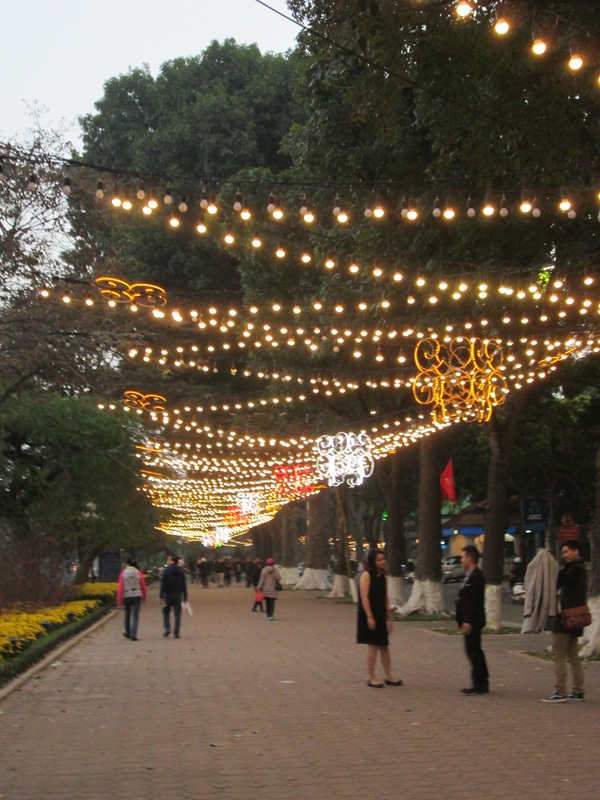
Having read enough about Vietnam to know about its relation to China (and enough Chinese to see the connection between "YueNan", Vietnam, and "NanYue", an old kingdom that spanned parts of Southern China and Vietnam) I was kind of excited to explore connections and traditions that still seemed strong down south. I also had the great opportunity to see how they do the lunar new year in Hanoi so I got to see the city done up in lights, the flower markets, the fruit trees strapped to the backs of bikes, women and children in bright clothes and ao dai, people paying visits to different temples and the smell of diesel as people poured in (or out) to see family.
Picture
Lights around Hoan Kiem lake

Read More
0 Comments

Beijing

2/21/2016

1 Comment


​After over 20 hours of being squished into a seat going from Xi'An to Zhuzhou, I finally came back to my apartment. I thought I'd have more time to ask questions and get work done before class on Monday but before I knew it, I'd passed out at around 4 or 5PM and woke up thinking it must be late since it was dark out and kind of quiet. My tablet said it was 6AM the next day. Whoops. I've got my gas started up again and Zhuzhou was dry for a while but now it's good and wet again. I've been lazy, kept some frozen buns and dumplings in the freezer to make sure I had something to eat whenever I got back so I've been making that for my meals. I also decided to message my liaison to see if I had class tomorrow. The answer is yes, 4 of them, and do you have the textbook? So I need to make a lesson plan and figure out what 4 classes I'm going to tomorrow. Ugh. I need another day to recover from that train ride. I don't quite understand why people go up and down the cars trying to sell stuff to people who paid for the cheapest tickets. In one memorable demonstration, a man in a railway workers uniform looped a belt around the luggage rack and stood on the little table in front of me while tugging and leaning back to prove how strong the belt was. The hard seat slow train experience is frequently not recommended for long trips, but I've done it about 4 times by now anyway, passing the time with people laughing at you or shouting "kan bu dong!" as you fill out 20 pages in your notebook, read a book, or try to talk to the people you will be close to for hours. On the bright side, this seems to get easier every time. Time seemed to fly by, but I was also better prepared than previous times.

Now that I'm back and in a better position to reflect on the past month, I decided to write about Beijing. Actually, part of why I've never been is because I was always kind of worried I'd just feel lost in a big city. I knew the Forbidden City was there, I knew the Great Wall was up there...but for some reason, it just never appealed as much as some of the other parts of China. It was a pleasant surprise to find that it wasn't as horribly overwhelming as I assumed it would be. It helped that I spent 5 days out there with a list of major things to do and remembered that when I went to London, I had to break things down by picking a neighborhood or a monument to explore from each day. I was surprised when some people told me 5 days was a lot. A man from Bordeaux told me he came for a weekend to see the Great Wall and the Forbidden City, then came back because the Forbidden City was closed. I guess for some, that's essentially Beijing.

Being in a part of China that receives more travelers from abroad was in some ways, pleasant and in other ways a little frustrating. More people spoke English and switched when I struggled (though they would ask questions or mention in passing that I looked Asian and the most tactful tended to say "But your hair is black"). I was a little less of a mystery. At times, people would hear me speak English and ask me to translate as when I went to an hour-long opera show that was clearly made to introduce people to the different roles in traditional opera rather than run through an entire show. At the venue, you paid different prices for a ticket which determined the kind of seat you got. When you went inside to sit, someone would look at your ticket and how much you paid and direct you to a seat where you could enjoy a pot of tea and some snacks. I paid the cheapest (180 RMB) and was directed towards a seat in the back where I watched as others came in and tea was brought out. One woman kept moving around after one of the staff showed her to her seat and saying "I want to be here...no...maybe here...no..."and the other woman working there followed her and spoke in Chinese, telling her that she couldn't just sit anywhere. They came towards me as I was reading, and the woman who kept moving around asked if I was alone, if she could sit, here, here, or here, and because I was speaking in English the other woman who had repeatedly told her what seats she could and could not sit in simply pointed and said "Ni shuo yingyu" ("You, speak Chinese"). To be honest, I repeated what the woman selling tickets had told me, watched her body language, and the only words I knew for sure were "280 yuan" and "180 yuan". I felt terrible because I know a real interpreter would be careful to fully translate but I wasn't a real interpreter and it seemed simpler than watching them run all over the theater. She finally sat down next to me and I got to hear about her travel plans for two weeks. It was fun to talk to her at first, then tiring as I listened to her itinerary and her thoughts on what I was and wasn't doing ("You're not going to do kung fu? You're not going to do taichi? You're not going...?"). She was going to see and do everything, and I had to admire that and it made sense for someone who only had two weeks. I shamelessly bought an Irish coffee at a Beijing opera venue because I'd been standing out in the cold beforehand and didn't enjoy such things in Zhuzhou. At the end of the performance, I left and she was still busily going over her map plotting out how to cover as much ground as possible in Beijing.
Picture
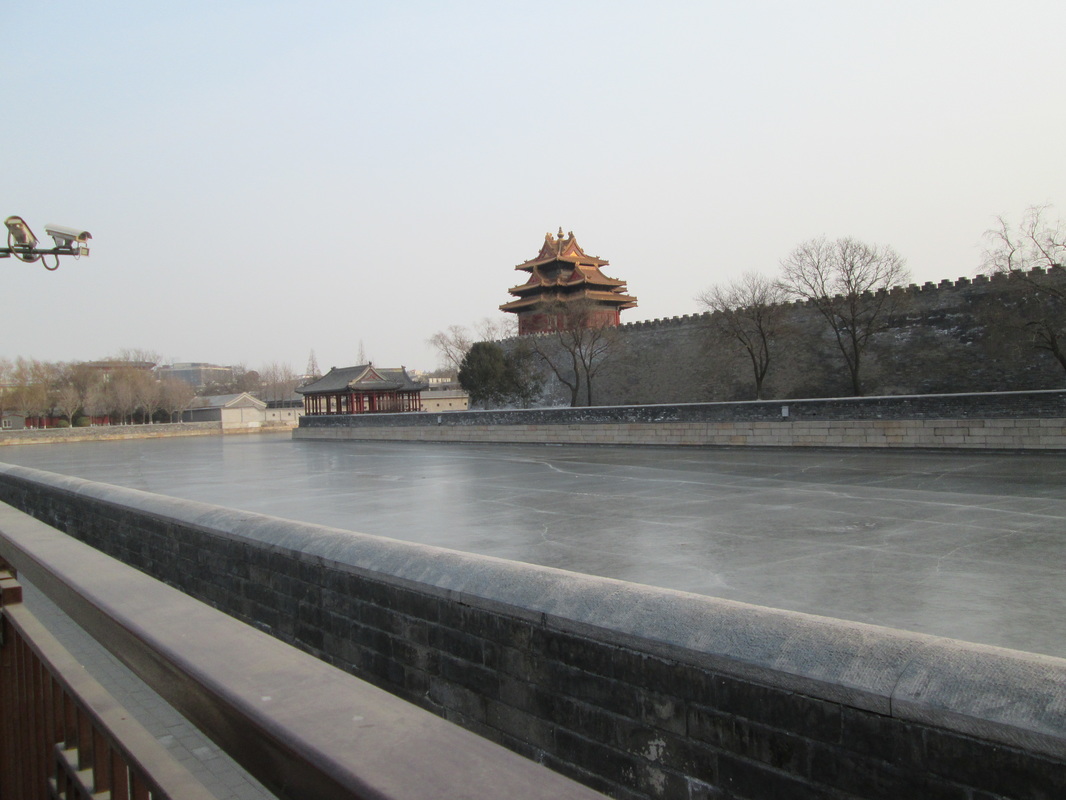
The frozen moat around the Forbidden City/Palace Museum.
In a lot of ways, I enjoy talking to other people who choose to come to China. They are often other young people on their way to something or trying something out here. I like to think it takes an interesting person to choose teaching here, given all the ideas people can have about China. But over my travels, there were times I got tired. People who would say it was a shame that my parents didn't teach me Chinese, people who hoped I could help them translate something, and people who didn't quite grasp what I was doing in China or what my situation was like often made me want the relief that came with disappearing into a crowd of other dark-haired people. My anonymity here is one of the things I love and the better I become at Chinese, the better I disappear into the crowds here (most of the time). People thought I worked way out in the countryside surrounded by rice paddies and when I said that I worked in a city people asked me about factories and I would mention that it was industrial and that we had "foggy" days but since I taught at a private school where students pay 5,600 each term to attend this wasn't a part of the city as immediately familiar to me. Then they would ask about parents and look confused when I told them I didn't know any more than one parent who worked for the city. Even in speaking with others who taught or worked in China, it became quite clear that the life I lived was very different from the lives of those who worked in Guangzhou, Beijing, or Shanghai. I've always sensed that, but I only realized that fully when I spoke to others whose experience of China was limited to big cities such as these and who had no idea what pleco was (an app that works as a dictionary) and didn't discover that they couldn't use Google translate in China until it was too late.

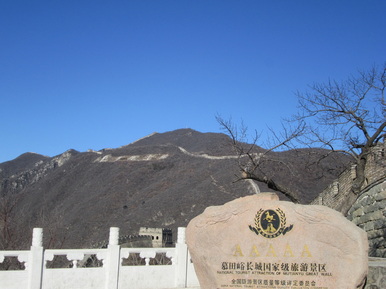
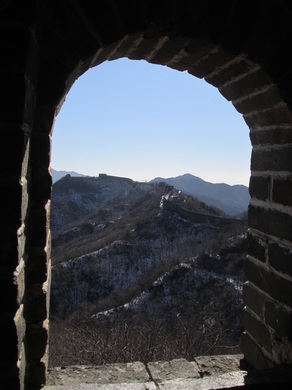
Anyway, when people weren't looking to me for translation or to tell me it's a pity I couldn't speak Chinese I found I really liked Beijing. (I've been trying to remember if I ever pulled aside a white American while I was in Europe and told him his parents should have taught him Gaelic/French/Spanish/German/Romansh/etc. It's possible I have?) I stayed around Xinjiekou in a hostel down a hutong and it was fascinating to see the different buildings as I went around the city. But I also couldn't help wondering what it's like to live in one, what plumbing and electricity must be like. I remember how in Italy, people would sometimes talk about wanting to remodel or do something to their homes and all plans would be stalled or completely canceled upon discovering some ruins or medieval structure or something. China has a lot of history, but that story isn't quite so common as buildings go down and come up quite often. I can't help thinking of Okakura Kazuko's The Book of Tea when he talks about impermanence and wooden buildings and one particular building that must be rebuilt every twenty years. After 4 years in Europe and being asked to "read" monuments and spaces, China has kind of challenged me because it doesn't always fit so neatly into what I learned after going through so many museums, past so many fountains, restored churches, and murals. At times, it's more the idea than the actual building. When I went to the Mutianyu section of the Great Wall, I knew it had a lot of restoration work (the toboggan ride didn't strike me as a Ming dynasty), but I knew there was a wall there with a history and a purpose. It'd be cool to go out to other sections or "wild wall" where restoration work hasn't been carried out. I finished all of Peter Hessler's books during my travels and couldn't help thinking of "Country Driving" as I wandered around. There weren't many tourists, and it was icy which was beautiful but a little dangerous at times as patches in shadow wouldn't melt away.


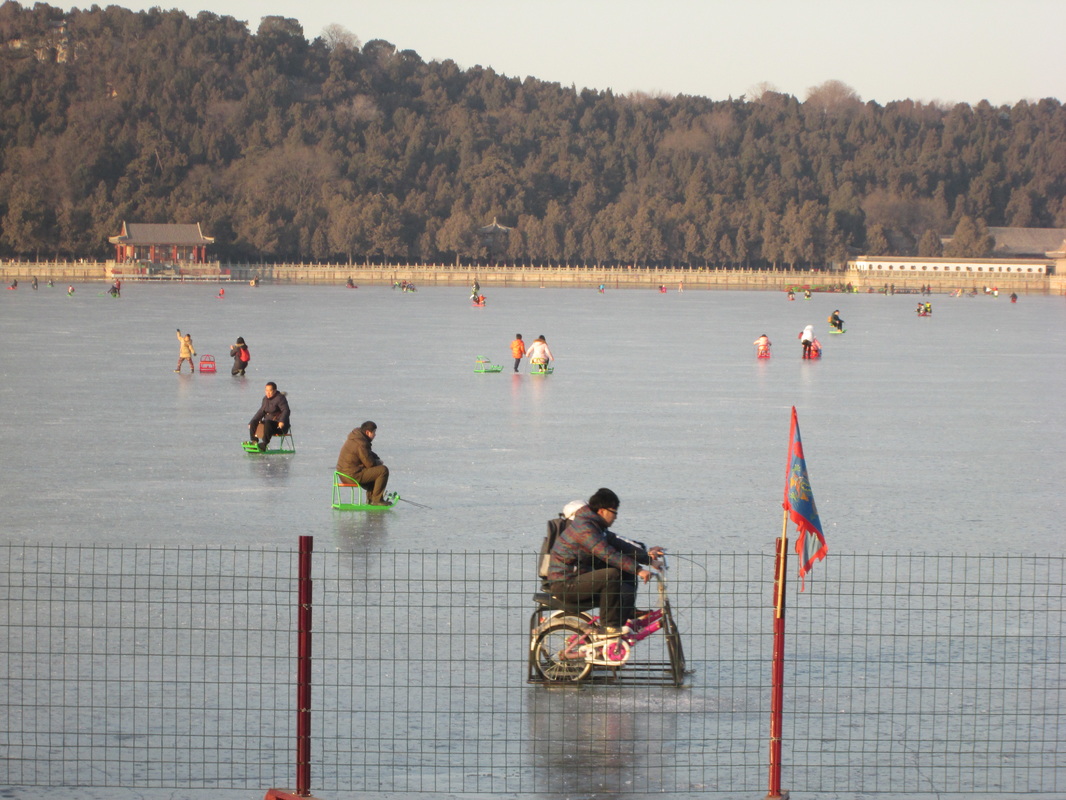
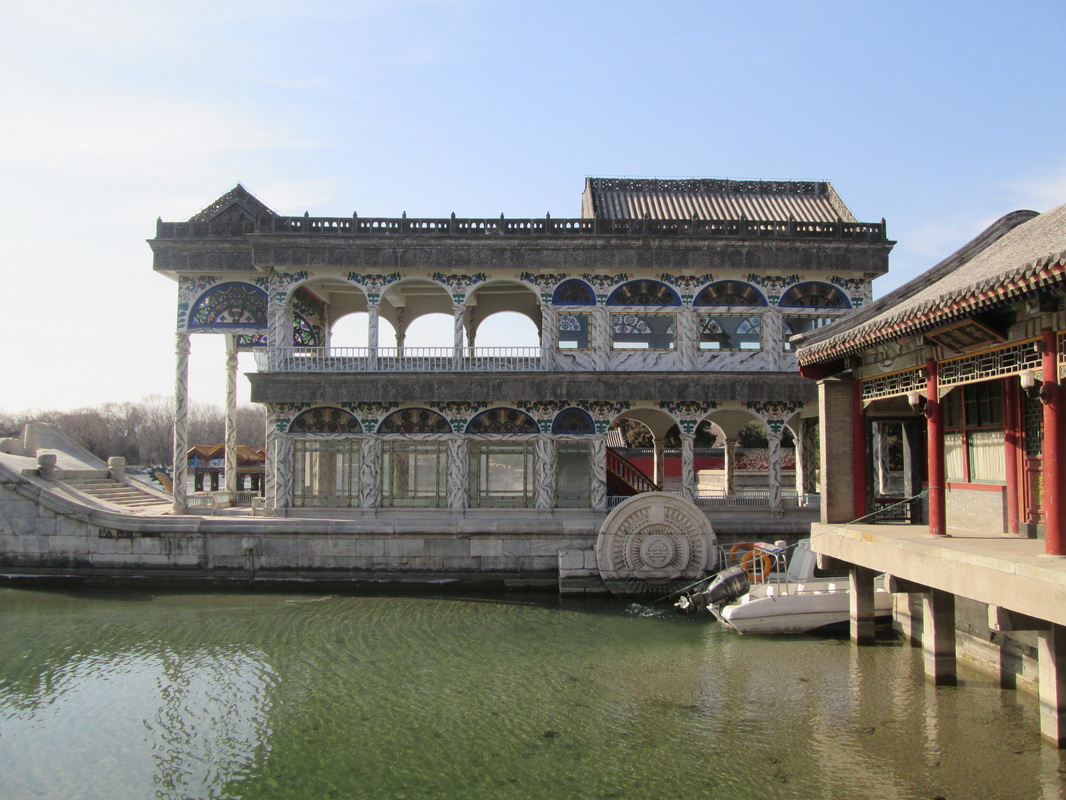
I found myself surrounded by an interesting group as I went up with people from America, Brazil, and Amsterdam. I listened to a father and son speak to each other in Dutch and Mandarin and thought of all the times I accidentally stumbled into a Chinese community in Europe and the silent exchange that would go on, the studying of faces, the unasked questions, the careful dialogue in Spanish or Italian, the recognition, and confusion that took place. On my way down, I spoke with a woman who had been doing graduate work on education and gender and teaching in Foshan. We traded WeChat/Weixin info and tried to meet at the Summer Palace the next day but we entered from different sides and wound up exploring alone but communicating off and on so that we finally met at the Fragrant Buddha Temple in the middle before she had to leave for a late night flight. The Summer Palace was beautiful, unlike most of what you will find written of Empress Dowager Cixi who in the 19th century used funds that were supposed to go towards the navy in order to restore the Summer Palace. Once on TV, they had a special thing about tofu and how Cixi supposedly liked the tofu for her stinky tofu to be really fresh and the host cracked some joke about "national stink". There is one boat on Kunming lake, but it doesn't seem terribly seaworthy and a lot of guides (such as Lonely Planet) make some comment on Cixi's one naval contribution.

Aside from the stops everyone makes in Beijing (the Forbidden City/Palace Museum, which is only more amazing when you realize how much is closed off to the public) I also enjoyed the Yonghegong Lama Temple and Nanluoguxiang, a great neighborhood for hutongs, souvenir shopping, and getting something to eat or drink. I went back twice for a "Hutong Pizza" and I wonder how many other women show up alone to eat a 10" pizza. The first time was no big deal, the second time, I got an appetizer and a pizza and the man kept coming back and asking if it was delicious, if I was OK, and if I was going to finish it. He should have seen me eat a duck after I skipped lunch and went to the Great Wall. I'm amazed no one said anything to me then, but I wonder what they were thinking.

Oh, and the food. Some people have told me they're glad the Cantonese came and influenced Chinese food in America but as I travel around China I've really come to enjoy all the things I never got much exposure to both in America and as someone with roots down south. Last year, it was crossing the bridge noodles in Yunnan and this time it seemed to be Beijing's "baodu", a tripe dish in broth which was perfect for walking out in the cold at night. I knew the prices would probably go up in Beijing and Shanghai as compared to Zhuzhou, but I was still surprised by the cost of food at times. I had a great time on Wangfujing food street where I enjoyed a hot bowl of baodu, some lamb skewers, and fried ice cream. Vendors would sometimes pick up on my accent and just switch into English. Occasionally, they mentioned that I looked kind of Asian or that I had black hair. There was something comforting in realizing that even though my foreignness didn't throw people off as badly as in some places I've been, people still had questions and I still had well-rehearsed answers. I didn't have any good answers for the man who sold me lamb and told me that the grilled scorpion was also very good. I admit, they looked very crispy but they were also over 20 RMB per skewer. There were lots of things on sticks I'd never seen grilled on sticks before down Wangfujing street, it was obviously a kind of novelty food place as well as a place for traditional foods so there were souvenir shops and lots of people but it was kind of fun. At one stall, a man would ask what you wanted and the other man would prepare it while singing your order which made a lot of people stop and laugh. When I realized this was at the other end of the street where they had a large foreign language bookstore, I was kind of in heaven. It'd been a long time since I had any access to so many print books in English, but I held off on buying any since I was traveling out of one backpack and would still be traveling for a while. You think hard about what you're willing to carry for weeks at a time when you live out of a single bag. It's also the reason I skipped out on a qipao in Shanghai, with the hopes of possibly getting something cheaper in Zhuzhou.

To make a long post short, Beijing seemed to have everything: all kinds of food, all kinds of architecture, books...but is it so surprising that it should have all that as the capital? Despite my initial thoughts about just feeling lost in some big city like the first time I went to Paris or London, it didn't seem to take me long to latch onto some places and find my way around them, especially as I got more familiar with the subway system. I love subway systems, especially after taking a good look at the intersection near my hostel and seeing the left turn lane all the way over on the far right lane. But really, it grew on me. There were a lot of times when I would go see a temple or something and just drop all my other plans to go for a walk and study all the buildings until I started feeling tired enough to want a coffee or something. Which is something of a prelude to how I spent my time in Vietnam, which is incredible for its coffee culture. When I had my fill of tripe, duck, and buildings, I made my way to the airport and met a woman catching a flight to San Jose. I wish my Chinese had been good enough to hold a conversation, but all I got was that her son worked in Silicon Valley and stupidly all I could really say was that there were a lot of Chinese people there (but it's true...). We wished each other well when we parted ways and I went to Hanoi thinking of home and how many times I'd known people on the other side of that story, people who had left home or people whose parents had left and the classmates I had who identified themselves in different ways. I couldn't help thinking too about how proud she must be to have a son who made it through the system here in China and found work in another country. Not because America is perfect, but for all the success it represents to have made it so far. I hope she had a happy new year.
Picture
Picture
Picture
People rolling and scooting on frozen Kunming Lake at the Summer Palace.
Picture
Cixi's boat. A lot of guides that mention this have a crack at Cixi's sole boat made from naval funds.
1 Comment

The Biggest Things are the Smallest (Long post and pictures)

4/10/2015

0 Comments

 
As far as teaching at my middle school, it's been a pretty short week. Although, playing 20 questions actually went pretty well despite the students not knowing the names of too many objects. I should have taught them more words for objects like rubik's cube, jump rope, candy, etc. But once they realized they had to guess what they're classmates were thinking of, not only did they become quieter as they listened to each other, I really felt like I'd done my job because it was my students communicating with each other instead of me talking (I always have independent activities and time for them to talk obviously but this one seemed to engage them more). Although the kid who chose the bow from "Green Arrow" stumped us all so I gave him 2 points.

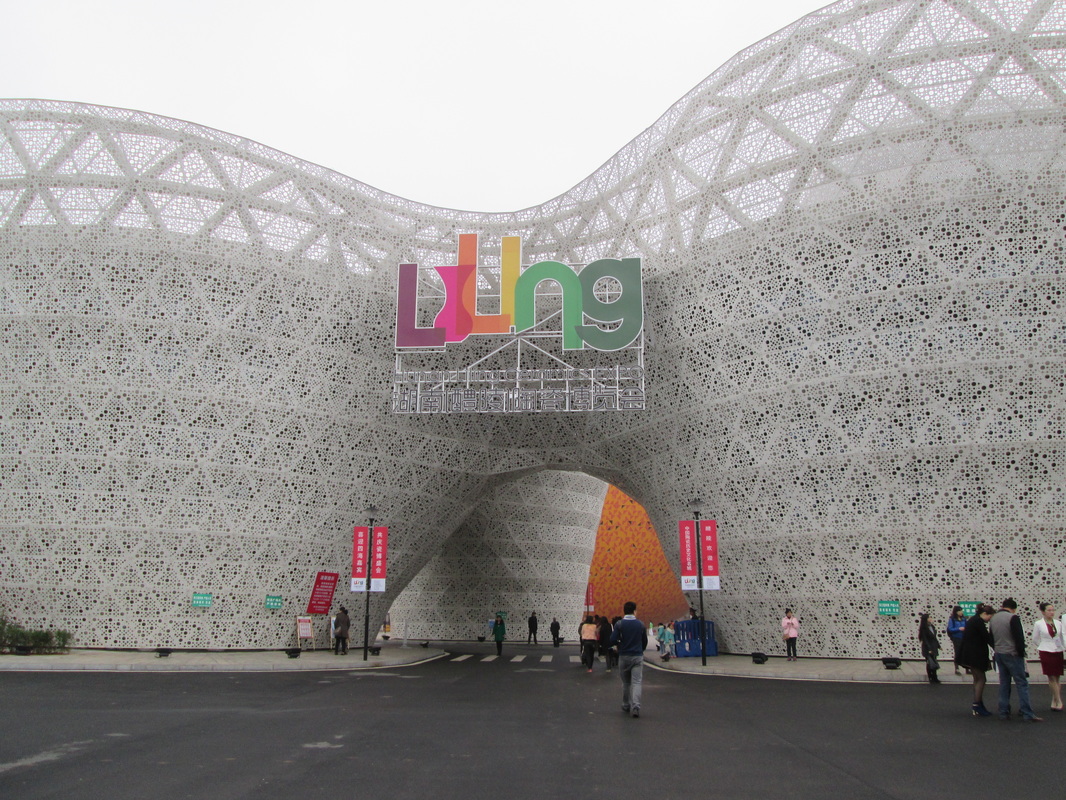
My week was marked by foreigners in Zhuzhou events both on Monday and on Friday. I was looking forward to the ceramics expo in Liling, but we arrived on the morning of the last day. Still stuff out on the floor, but a lot of empty booths and shelves since a lot of people were packing up . And then we were a bit late to the museum so we had to rush through it and didn't see much. There were a few nice pieces, the biggest ceramic jars were all for alcohol, and we saw some ceramics done so finely that they were used for lightbulbs because they were so thin. I was looking for a gaiwan and saw some nice celadon sets that were cheaper than I expected, but nothing really caught my eye. I talked to one of the teachers I haven't seen much since getting separated into our sites and these events are always interesting for me because I get to meet people working in Zhuzhou who aren't necessarily teaching, though there are a number of teachers. I met a family with a Chinese wife and a German husband and their young daughter. The husband said he'd been here for 4 years and hadn't learned much Chinese. He said his daughter always calls him very lazy in Chinese. I met another man working with China Southern Railways too. I may have mentioned this before, but Zhuzhou is probably the biggest transportation point down south. Sometimes people have to come here from Changsha to get a train because we have so many connections that pass through here.

Speaking of trains and connections, during Friday's event for foreigners I had a great conversation recently with a man who's been here for 13 years. He mentioned that you only get a passing view of a city from the trains and don't always get to see everything going on in there. Maybe he meant that because of all the people that must pass by Zhuzhou when they ride the train but never get off on their way to Changsha, Guangzhou, Kunming, or other places more popular as destinations than as stopping points. I was really fascinated to hear everything he had to say because for the most part, I've noticed/encountered relatively young people who stay for 5-6 years and then seem to move on to other things (though there is a group of people who started a company in Changsha, a few of whom used to be in WorldTeach). To find someone clearly at a different stage in his life from many of the other younger people I run into both because of the opportunities available here in China for foreigners (teaching is the most common, it's usually a little harder to find work in other fields but not impossible and that while most seem to like it here and stay for longer than they planned, they seem to move on to other things) presented a unique opportunity. I asked him what brought him to China. He told me that many people from his home country (Morocco) generally go to the US or Europe for work or school, but he saw a growing China and came out of curiosity. He intended to stay for a year or two, then to go to grad school in Belgium. Now he's married and has an 8 year old daughter. I asked him about the biggest changes he's seen in his time here. And like with many things, the biggest changes are the smallest. The first thing he did was point out of the bus windows and talk about the cages for air-conditioning units and how the government had paid for metal bars and things on all the windows so that things wouldn't fall out on the street anymore. The next thing he talked about was jaywalking, "It's much more controlled now. We had guys standing on the street and they would ask jaywalkers for 20RMB. And then people would run away or stop jaywalking not because they didn't want to pay, but because..they felt very silly..." he put his hands against his face so I asked "Embarassed?" "Yes". He told me that the Xiang river used to be a total mess. Things stuck all over the banks, dead animals, junk, bikes and other things used to float through the river. He told me about the efforts to clean up the river around Zhuzhou to make the most impact. If they cleaned up further downstream then the dirty water from here would still come down to others. He told me about the factories that have since moved and how awful the northern part of the city was when it had a chemicals factory. He told me all the chimneys (except one) have since disappeared. Since we were riding on a bus back into the city and I saw the cars around us as we went on the bridge over the Xiang, I asked him if there were more cars. "Oh yes. Many more. And many more kinds of cars." He pointed out his school and the dorms, the opera house in construction, and I asked him about Yandi Square. He told me the statue went up the year he came to Zhuzhou, but there was no square. It was all fields and some graves. I find it hard to visualize. I actually found someone's site where they posted photos they took years ago and compared them to the photos they took on a recent trip, but I still struggle to think about what it must have been like. When I go to YanDi Square now, it's clearly been designed both as a place of leisure and a bit of a tourist spot but there are still things in construction such as the opera house and a concert/arts hall. Those fields have been turned into a lake. The whole set up is near a museum/development exhibition hall which I've only been to once. Listening to my new friend made for quite a story and a chance to get an understanding of this place that I really haven't had access to too much.


It was a long conversation that took course over dinner at Songxizi and the bus ride back into the city. And I guess I'll now have to work backwards to talk about that long but very satisfying Friday. So I and the other teacher here agreed to take part in a program with other foreign teachers to teach in a school that was still in Zhuzhou county but outside of Zhuzhou city. We were assigned to LuKou Town. I got nervous and started to overthink what I needed to do a little bit but then looking at my lesson plan and powerpoint realized that I'd done what I could to teach new words and play charades, but that at this point I was just going to have to deal with any problems when the problems came. I was a littler nervous because I was teaching 8th and 9th grade for a day. It was weird. I didn't have to write and show so many pictures. I just said "take out a piece of paper" and pulled a piece of paper from my notebook "write one verb" and wrote the word swim "now fold it", and showed them, "and put it in this bag". It went smoothly, but the same verbs (fly, play, make, do, swim, sing, dance, run, jump, fight, write, read, watch) came up over and over again so after 20 minutes, I let the last 25 minutes of class be about questions. The 8th graders seemed more willing and warmed up to me more than the 9th graders. I think the same 4 outgoing 9th graders asked me questions over and over again. The 8th graders were so ready to ask me anything some pulled out their textbooks and scoured for a topic. It was really fun. And lunch was awesome. I finally tried hongshao rou while another guy with my name started singing "If it's good enough for Mao, it's good enough for me." He was a character. I knew I'd like hongshao rou before I ate it because everytime I see a picture of Mao's favorite dish it's always cubes of braised pork that seem to be mostly fat. The texture, the flavor, and all of it was great but we all resisted eating the whole thing since our table was so crowded with other foods. Then we went back to organize a question and answer session with the students

I remembered how curious and active my students were when we first met, so I was looking forward to being the new face on campus again. What I didn't think about is how much bigger the school would be (it was a public school and I think it covered primary to middle, if not up to high school) and how we would be mobbed by students who wanted us to sign their notebooks, their jackets, their English books, and sometimes, themselves. It was crazy to leave lunch and get to where we needed to be. I'd already allowed my students to ask me questions in class but there were so many people still who had questions. Some of them surprised me actually, one very outgoing girl with very good English in my 9th grade class asked me what I thought of LGBT and not really knowing the views I would encounter (I've heard that because China doesn't have the same religious context, it's generally more open but I also know that there are people who don't know much or don't understand, and then there's the traditional idea of family too...) I just said "I know what it is, but I don't know very much about it". But I probably should have guessed from her question that she asked because she knew something. She told me after class that she was a "B" and I was pleasantly surprised to find someone so young and so open about who she was. But it may just be that I'm a foreigner and a number of students have told me they feel free when they speak English, so there's that to consider. The sense of freedom is part of why people say such strange things in English sometimes. We talked about South Park, if I like pandas, my favorite drink, where I'm from, what schools in America are famous, if I like Chinese food, if I like China, if I liked the school (they asked me this during my first class when I'd been there for a total of 20 minutes), if I liked la tiao ("What's la tiao?" "This! Try it!"), and if I could accept some gifts from the students. It's always a little weird to be such a huge celebrity for a day on account of nothing more than you being a native English speaker or from another country, but I'm now the proud owner of a handmade pair of earrings and two hair pins, a Chinese chess set from Zhuzhou's top chess player, and a drawing of a tired kitty. I let them have my QQ number too so now I have over 30 requests that I need to add to my contact list. It's always hard to juggle being available to students with your own need for time to yourself but these kids don't have a regular oral English teacher so I thought I'd let them at least write to me every now and again. And they were so welcoming and such characters, I'm not saying no to them.

So that's a very brief summary of my week. On Friday, I had to leave my apartment at 7:20AM and we got back to the city at around 7:30PM so that day alone was pretty packed with new sights and new faces. We had to get up early on Monday too but besides seeing the expo and the museum before they closed for the day, we didn't have a lot of commitments to meet. And we were done after lunch. But I do have some photos of those excursions so I guess I'll spare you all having to read more text when I could just show you people making soy milk.
Picture
Entrance to the Liling Ceramics Expo. The museum is here too.
Picture
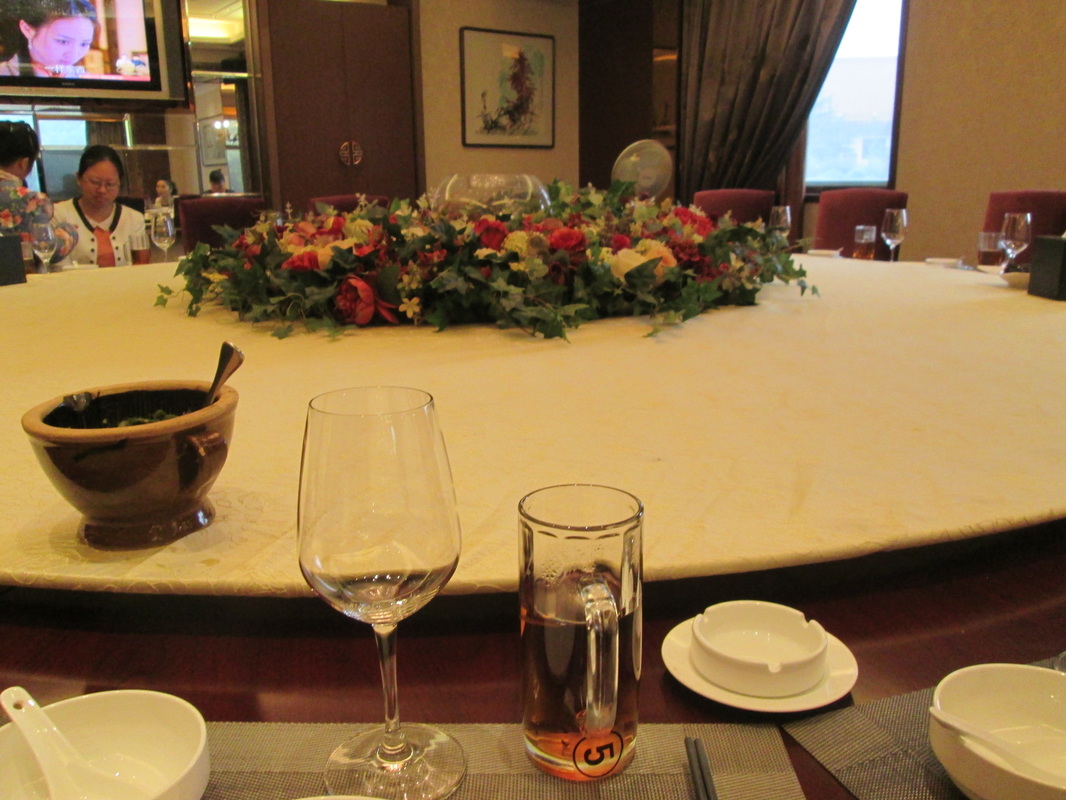
The biggest lazy susan I have ever seen during Monday's lunch after our trip to Liling. It moved slowly on its own.
Picture
Expectant students crowding for a look at the foreign teachers after lunch on our way back to the meeting room. I've never had to navigate a wall of students before.
Picture
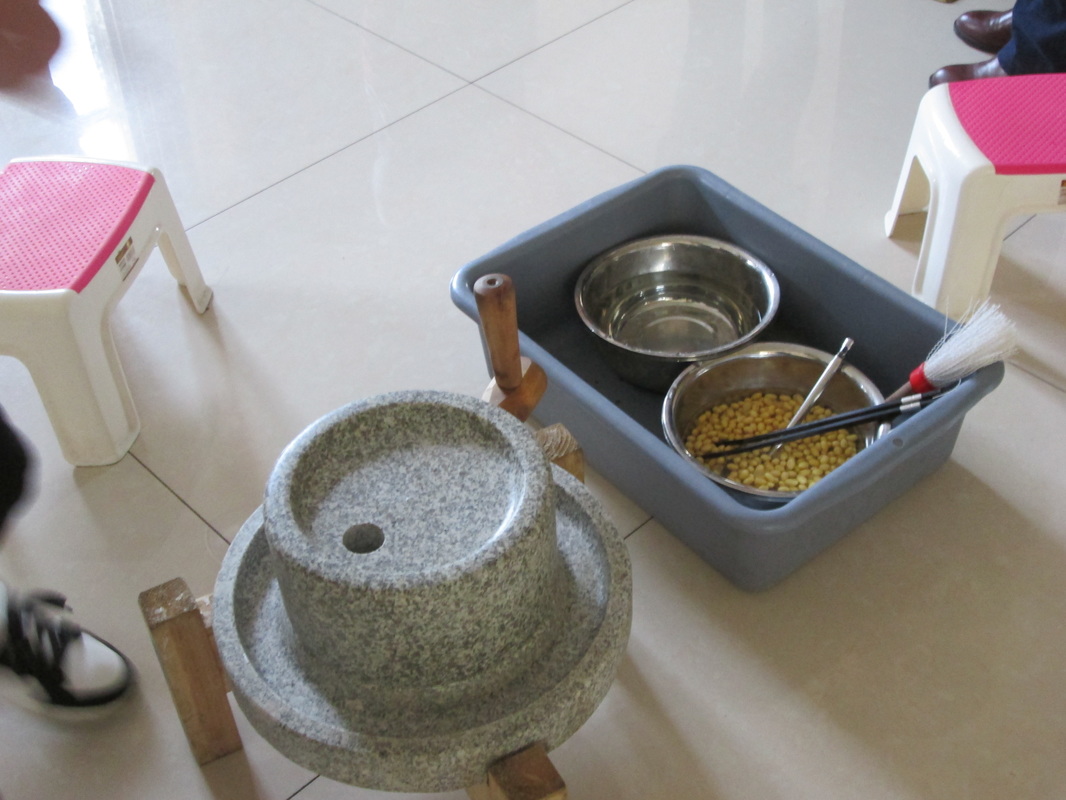
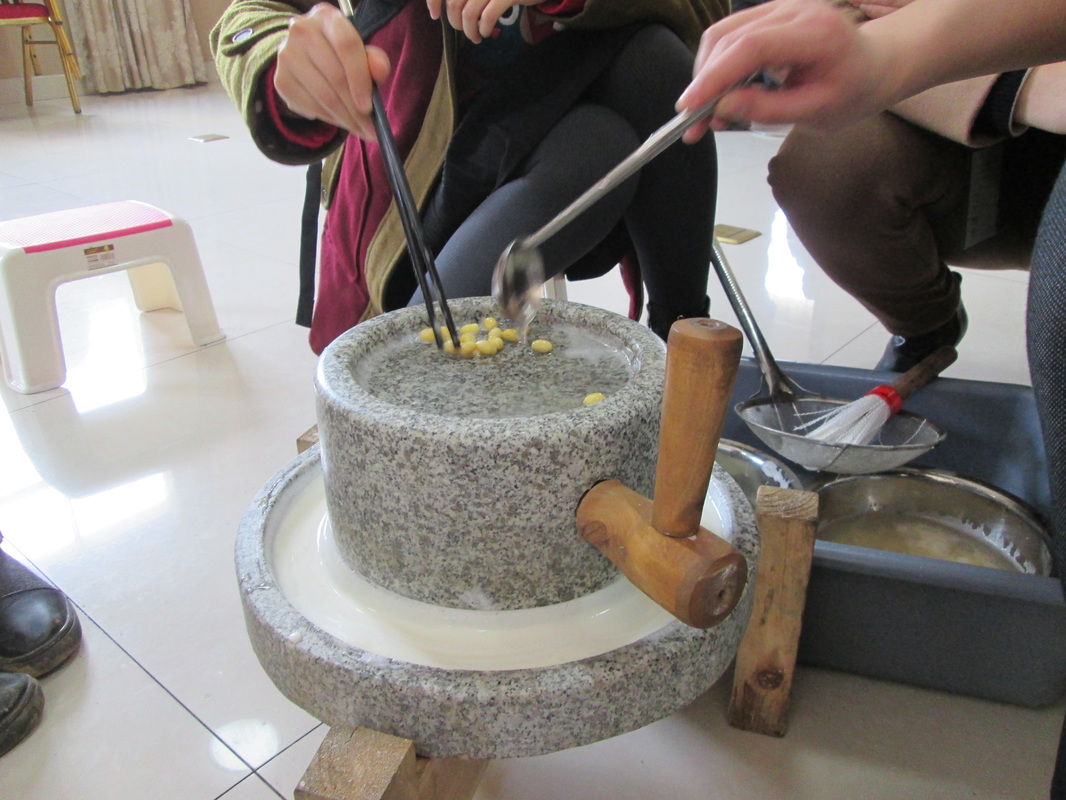
Our tofu making materials. They said we'd make tofu, but then we really just made soy milk. Still fun though, kind of meditative to just grind beans.
Picture
After a while, we just let this one man from our group make the milk/juice since he managed to get the real thick stuff not the watery stuff we produced.
Picture
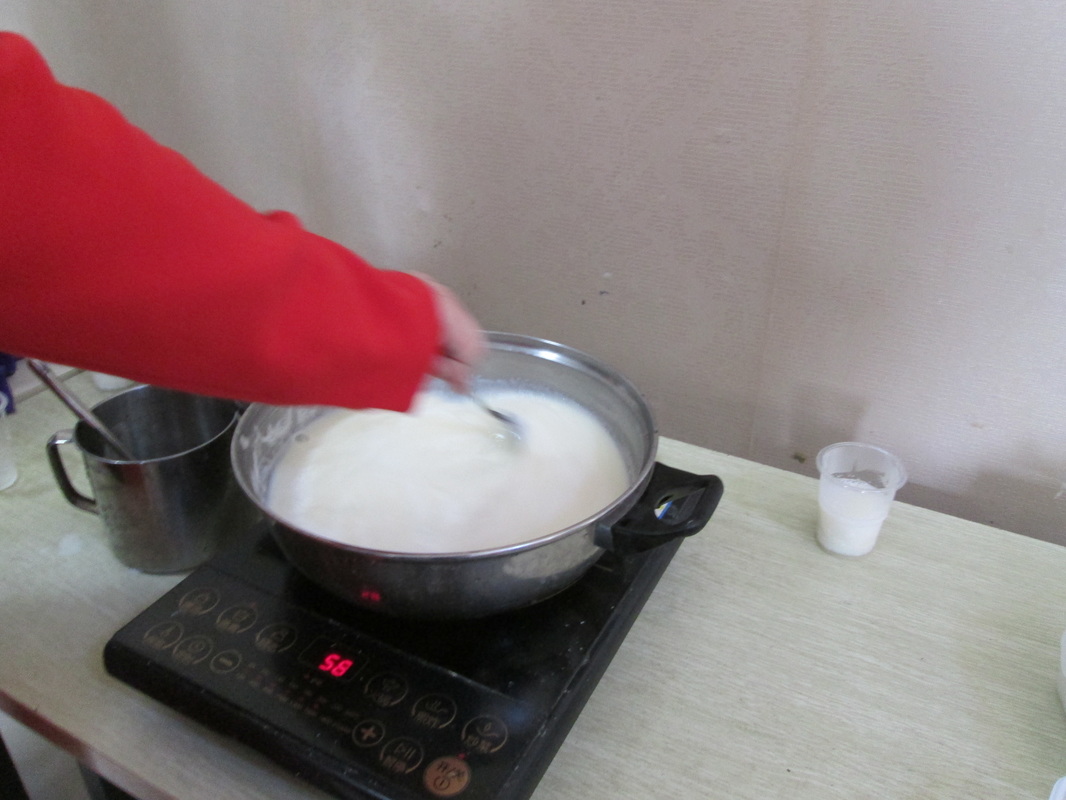
Final stage before drinking: heating it up with vinegar, and adding sugar before drinking.
0 Comments

Yuanyang

2/20/2015

0 Comments

 
So last post was pretty much about how frustrated I was with not catching a bus on time for my room reservation and missing out on half my reservation (my numbers were off and I realized later that I had two nights). I have to admit, for a while I looked at the 7 hour sleeper bus ride it was going to take, the time it would take to get back, and the time I had in Yuanyang and asked myself if it was all worth it. I'm happy say it was:
Picture
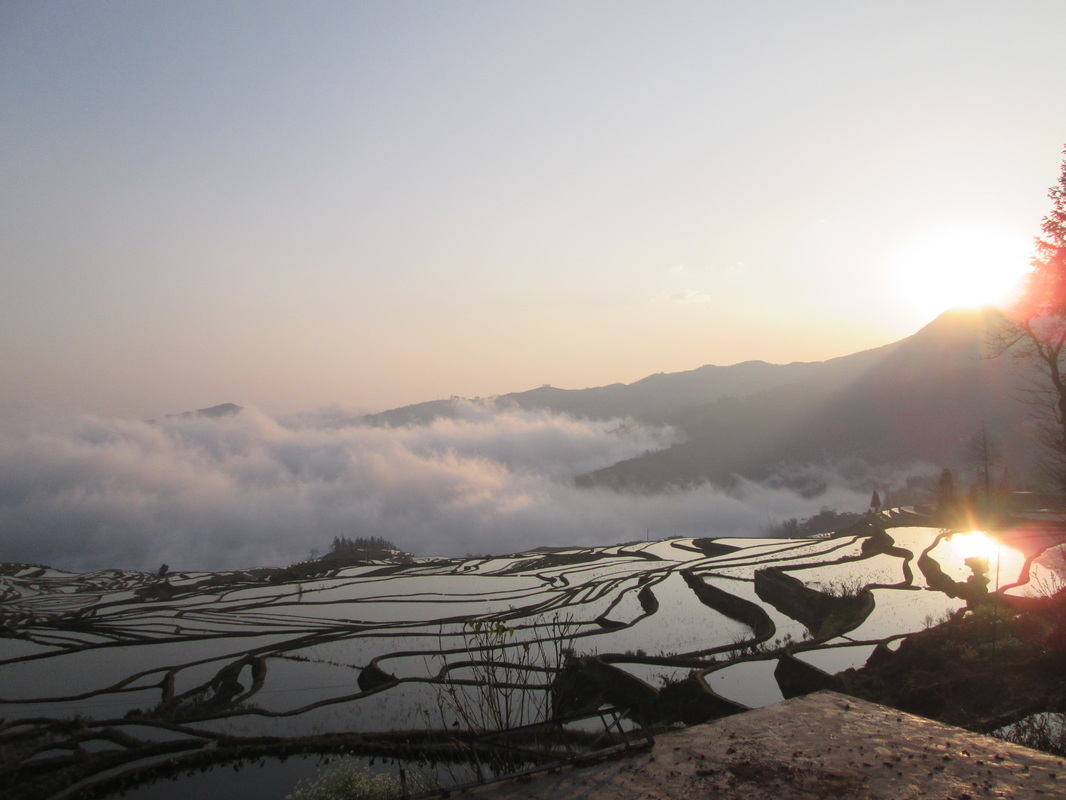
Sunrise from Sunny Guesthouse viewing area.
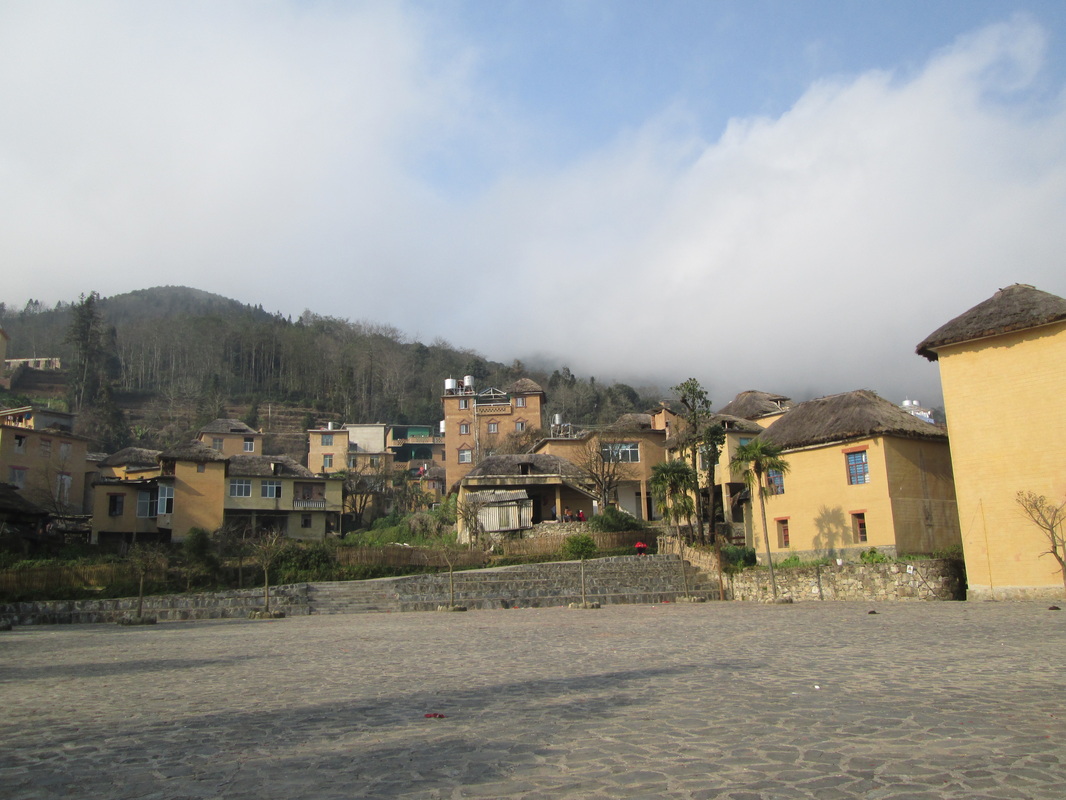
Initially, these rice terraces formed by the Hani over 1000(?) years ago were the only thing that I knew about, the only big draw I'd heard of, and the only thing I found in a guidebook while wondering if there was something special going on in winter that I should check out. But since I stayed at Sunny Guesthouse in Pugaolao Village and pretty much slept next to the terraces, I found the whole area to be extremely pleasant. Given the nature of the terraces, they can't really industrialize how the red rice is grown and harvested here. I've read travel websites and guidebooks that talk about how great it is that this place is relatively untouched by tourism, but I don't know if it's entirely true when they've built viewing platforms you need to pay to enter. It's true though that since it's not the easiest place to get to, it's not really got a lot of other things going on for tourists. I would totally go back here, maybe even in its off season when the terraces aren't full of water since I really enjoyed my neighbors, a bunch of little girls who were always playing and singing together at all times of the day. One of them showed me to the guesthouse and I wound up giving her both the cakes I had in my bag in exchange for her help and she always smiled at me whenever I walked past.

Maybe I should go back to that first day of arriving. It was the 18th, New Year's Eve. After resting on the bus as best as I could, a man came on with a flashlight asking if anyone was going to DuoYiShu and I said yes. So I walked out at (6? 7?) some dark hour of the morning, loaded up into a minibus with one woman and two men and we set off for DuoYiShu. When we arrived at the viewing area, I asked if he could tell me where the parking lot of Pugaolao Village was. The other man siting up front heard me struggling with my Chinese and he spoke to me in English. We all got out at Pugaolao and they seemed bothered by me traveling alone so they walked with me down a to convenience store that a local man had set up in his house. The man called a friend who spoke English and had me talk to him, the woman who traveled with us stared and said "You don't understand?" as she tried to work out my nationality and my appearance. So the man who ran the shop walked me partway before asking a woman with a big-eyed baby to help me out, she walked me partway then asked a little girl to help me out and she got me to the guesthouse. Dante had Virgil and Beatrice, but I got 4 guides on my journey through what felt like paradise despite how tired I was. Cool, clean morning air, sun already risen over the terraces, roads with water running down the gutters everywhere and taking advantage of the mountain that this village is built on, little girls in traditional Hani tunics, blue sky, and all of it more than welcome after the time I've spent in cold and wet Hunan. The change in the air was the first thing I noticed as the bus came up the mountain since I couldn't see much outside my window at night.
Picture

Read More
0 Comments

My Second "Spring City"

2/15/2015

0 Comments

 
So here I am taking stock of my things and food should I find that it's difficult to make my way to a store that's open during the holidays. I've noticed that the noodle shop I really liked my first night here has been closed since last night and I think some of the smaller shops are closing up as people leave for the holidays. Places like Wal-Mart and Carrefour have become difficult to navigate (at least compared to Zhuzhou) as people stock up decorations and gifts. I imagine bigger places like them will be open during the new year period.

So I never made it out to the bamboo temple (takes a bit of work changing buses and ultimately takes at least 40 minutes if not an whole hour to get out there). So no surfing arhats.But the city itself has been really pleasant and I'd be happy just staying and wandering here. I've come to know a few people who are living at the hostel too and they've been really nice. Traveled a lot too so we've talked about our different impressions of different countries.

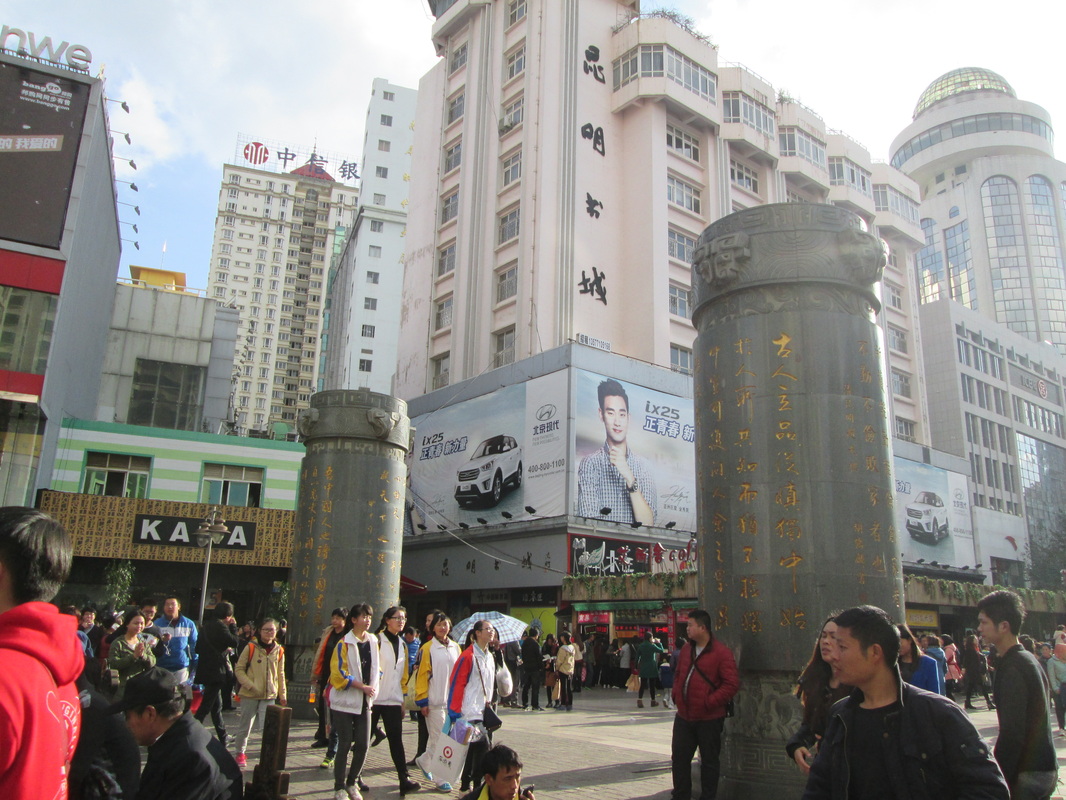
Speaking of impressions, I can't help noticing how there are police everywhere and now there's a truck stationed nearby the market I've been walking through frequently. I asked some of the others who are staying here if there's always been a lot of police and they said that it's been that way since they got here. Little police pods watching traffic all the time throughout the city. But I know about some of the terrible events that took place last year and I'm leaving from the very train station where they took place. I also received an email saying to remain aware of my surroundings in case anything happens during the new year period so that may contribute somewhat to my sensitivity to all the police. But I've felt very safe here and see why so many think they'd like to come back and work here in Kunming. Just as in Cuernavaca, "City of Eternal Spring" and my first chance to go abroad in high school, the sun is out and the flowers are blooming in February. It's beautiful, the air is pretty clear, the sky is blue, the streets are pretty clean...every now and again you run into a kid peeing on the street but I don't feel like I've had to look behind myself for advancing motor scooters quite as often as I do in Zhuzhou. I walked out to find Tian Fu Famous Teas and went along Dongfeng and Nanping Jie and found it to be a very different world from the relatively quiet Zhuan Tang park. Zhuan Tang has people dancing, fishing, sitting on couches by the lake, cleaning ears, and getting a shave. Nanping Jie feels more like a busy modern city with tall buildings, international supermarkets and fast food chains, brand name stores, and kids in teeny paddle boats in shallow pools where they're parents can observe them while grabbing a snack. You can find people participating in all kinds of activities in Green Lake (Cui Hu) park as well but there's more touristy merchandise and candy. And people selling bread for the birds.
Picture
Nanping Jie. A totally different world from Zhuan Tang Lu.

Read More
0 Comments

Back to the Mainland

2/12/2015

0 Comments

 
So I'm leaving the Cantonese speaking part of China and though I didn't get to everything, I did knock quite a bit off my list. I'm now moving on to Yunnan province, to the capital city of Kunming after a boat ride to the Shenzhen airport. I meant to catch a slow train but every single train for the date I wanted was full. Maybe I could have asked for standing room but that would have been 24 hours of standing with my stuff (or bringing my own seat). So flying it is. While it is sad to leave some of the conveniences of having more available in English and I feel like I've just begun to really enjoy Macau, I have been looking forward to seeing the surfing arhats and in particular, to going out to DuoYiShu for a few days. The terraces look gorgeous and the there's a large Hani community there as well so I have an opportunity to learn a little about one of China's many minority groups. In fact, the Hani made the rice terraces that so many come to see filled with water and colors in the winter. And though I'm missing out on the things going on in big cities for the new year, I've also heard that more rural areas tend to use more firecrackers in their new year celebrations...I guess it'll be like trying to sleep when they have big events or a new business opening up in Zhuzhou.
Picture
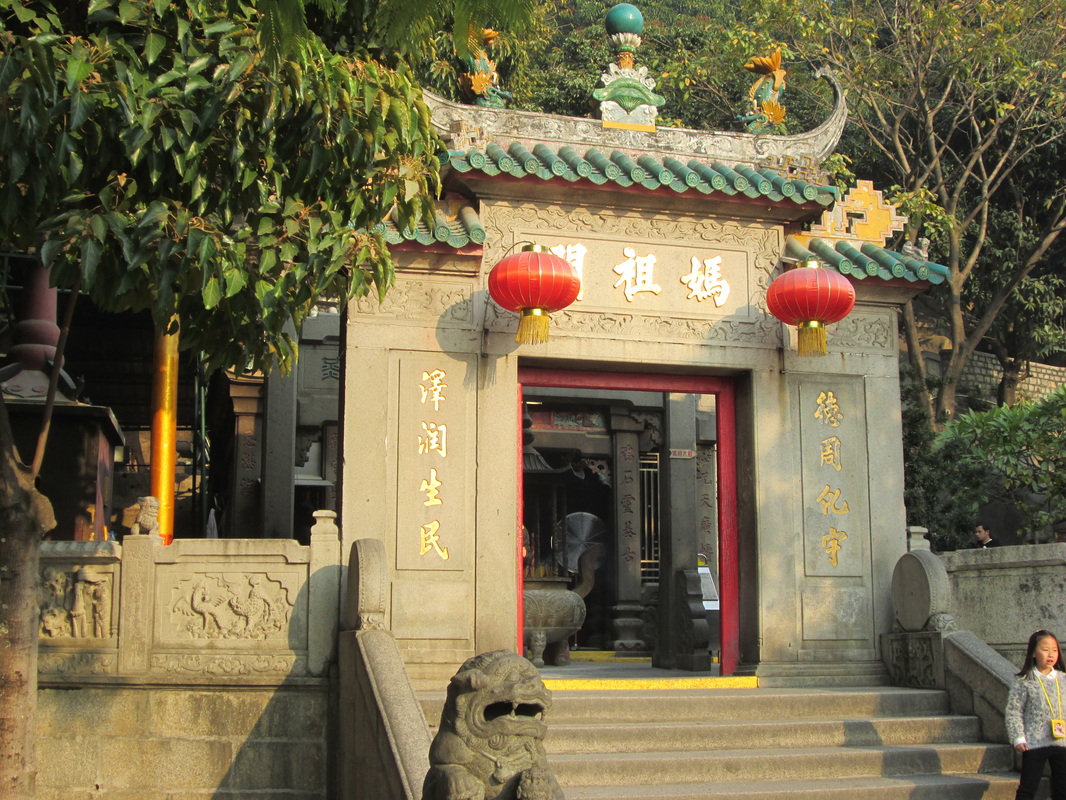
A Ma temple, where Macau is supposed to have gotten its name from after Portuguese traders asked about the place they landed at. Also home to incense sticks bigger than human beings, I had a head covered in sweet smelling ash when I left.
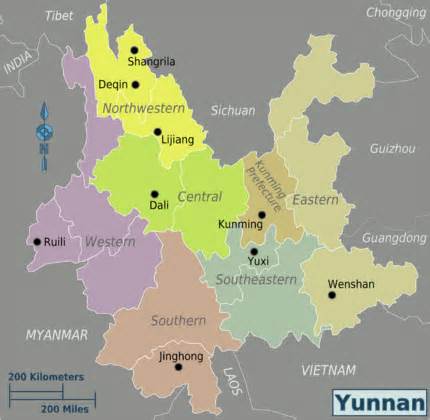
Since I'm leaving Guangdong and the SARs behind, I'll give some very quick information about Yunnan province. Yunnan borders 3 different countries and is home to about 25-28 different ethnic minorities (nearly half of China's 56 recognized ethnic groups). As a result of this, the food has a lot of different  influences and I was surprised to learn that cheese makes up part of the culinary traditions here. So of course, I'm looking forward to trying everything. I'm already happy to report that I've found massive bowls of noodles for 8 yuan across the street and that the streets around my hostel are full of eating options.
Picture
Map of Yunnan from wikitravel.org
I can't say I've really got a lot on my list here. I've already mentioned the Bamboo temple a few times but it looks like a few days of just wandering and eating. Which is more than fine by me! I'm thinking of finding a cake of pu'er (bo lay) tea while I'm here as well. I think I'll need it by the time I've eaten my way across Kunming. I hear that they do roast duck with honey here and my nose is on the lookout...
0 Comments

Spring Festival: Macau

2/9/2015

0 Comments

 
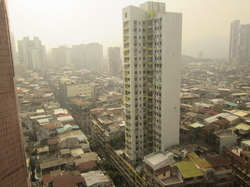
PictureView from my room
So after an hour long boat ride that I pretty much slept through, I arrived in Macau from Hong Kong. I changed my money (but I've seen found that it's not unusual to find places that take Hong Kong dollars or list prices in two currencies) and caught a taxi down to the hotel. I thought about walking and for a while was looking at buses on the map I picked up but ultimately decided that I should just find someone who knew the way since I'd get a sense of the place in a few days anyway. And it hasn't been too hard though it's somewhat startling to find a bus ride costs 3.20 Macau pataca when a bus ride in Zhuzhou costs 1 yuan. It's also annoying that 10 cent coins here are teeny little things so finding that 20 cents has been a little tough and at times I've had to just drop in a 5 pataca coin and get on. My head's still a little funny, but the sun's come out in Macau and that's been nice.

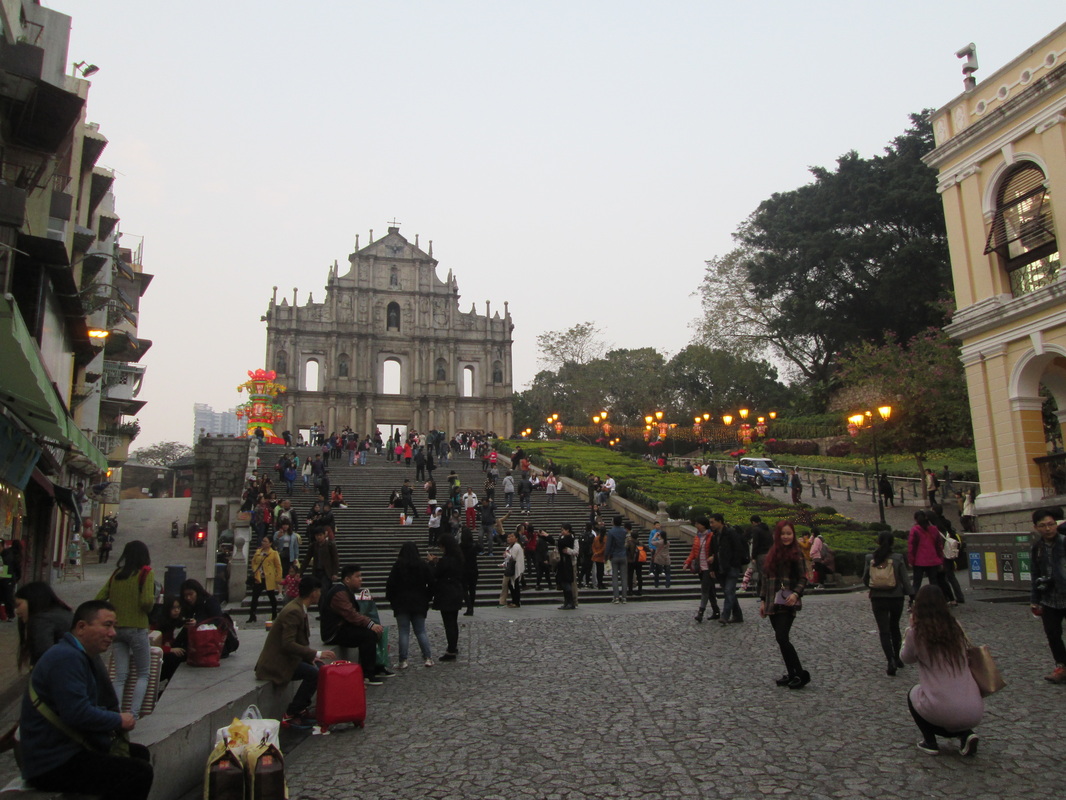
PictureLargo do senado.
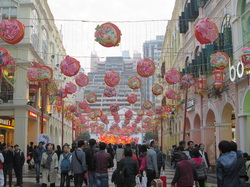
Though I've never been to Portugal, it has been kind of nice to be somewhere with a more European influence. On my first night here, I bought a package of presunto (cured ham) and a cider to enjoy. Weirdly, imported beer here seems to be a little cheaper but soda is more expensive (5 pataca for a sprite as opposed to 2.5 yuan). The tiles along the streets and some of the arcades remind me at times of wandering through Italy too. I've come to like it here since it's got a lot of things available but the parts I've been through don't feel as overwhelming as Hong Kong. There are signs of the coming new year everywhere. I passed by a spot where they're setting up a flower fair (which sadly, as I chose to go to little DuoYiShu for new year's week I'm missing the flower festivals and big events going on down here), there are lights and zodiac animals (sheep especially) everywhere, and signs are posted for the firecrackers and festivities that are coming later this month.

Picture
Ruins of St. Paul's, also with decorations for the coming new year.
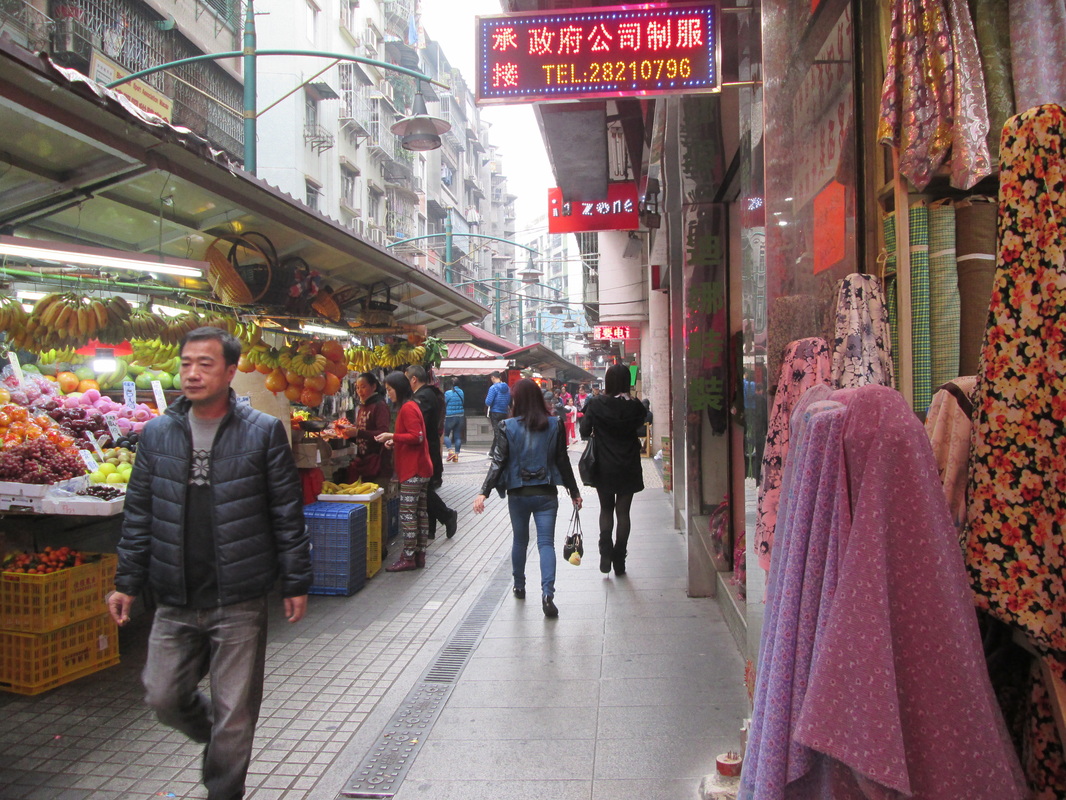
Aside from wandering, I've made it out to one casino/hotel, walked to Jardim Lou Lim Leoc (Lou Lim Leoc Garden), seen the ruins of St. Paul's, and have been eating all kinds of junk. One of my favorite places to wander through is a market near the hotel where I've been able to pick up all kinds of lai see, eat cheaply, and stare hungrily at the roast meat carts. It's also where I've been getting a simple but filling chicken soup quite cheaply and I feel pretty good every time I grab a cup.
Picture
A small part of a larger market selling jade, soups, steamed buns, lai see, jewelry, fruits, vegetables, and roast meats.
Picture
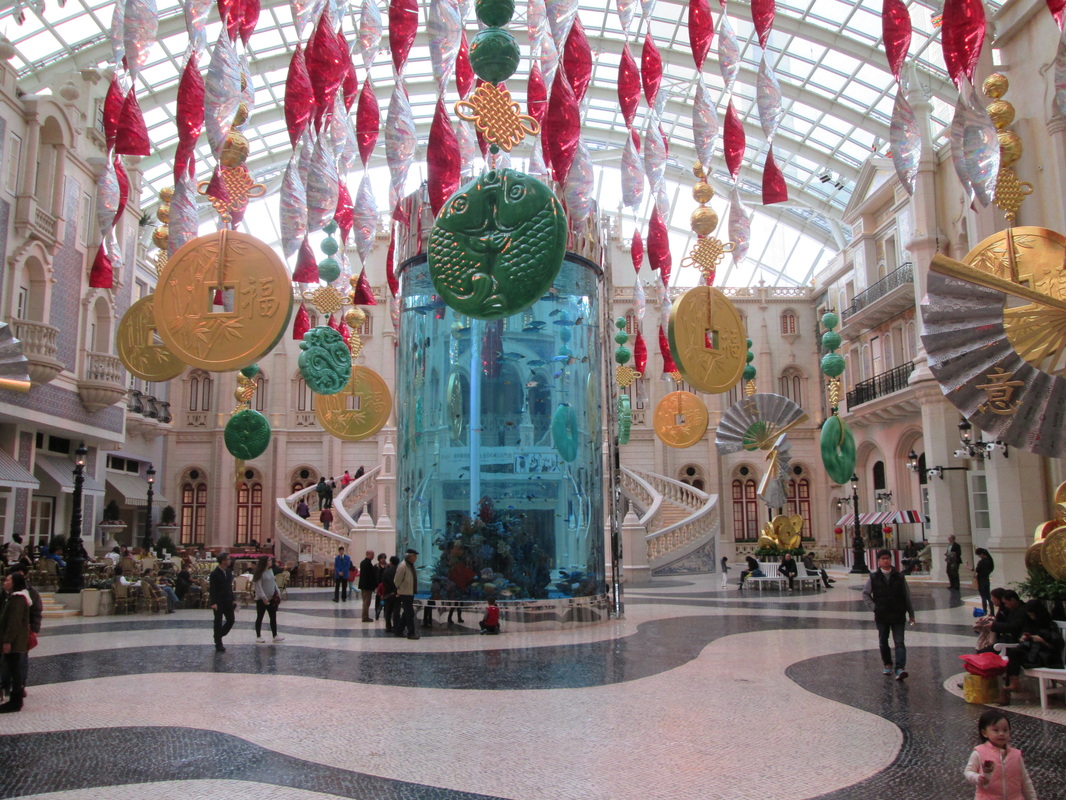
Inside MGM
Macau has also been my opportunity to connect with distant (in just about every sense of the word) family. I tried to call my distant cousin before leaving on break but either I forget the code I needed, was told that all Macau numbers needed another 6 digits, or when I finally got through, was unable to communicate and was simply told "BYE BYE" when I spoke English. I had an address, but I wasn't sure if I would need to find out the address in both Chinese and Portuguese or not in order to send a card. I decided not to take chances and was told that the address I had was for his office so I made up my mind to take a day to go find the office and ask about my cousin. The first day I went out there was the weekend, so though I discovered that the place was a 7 minute walk from my hotel, everything was dark and shuttered. So I tried again on Monday, found the lights were on but no one was there so I decided to eat a late lunch and come back. I found a woman and a man at work and said "Hello" and asked about Hin but they didn't look to sure about what I wanted until I showed the card I wrote to the man who asked if I wanted him to give that to my cousin. Not being totally sure what else I should say or do, I said yes and thank you. So if nothing else, he has a "gong hay fat choy", a cell number, and a mailing address from me. And he'll also know that I'm on the mainland until June. Maybe I could have done this better to communicate my presence, but I wasn't sure. I really wanted to say something to him earlier but this works as well. But for knowing next to nothing about Macau, I have to say that finding a hotel a short walk away is pretty good.
0 Comments
<<Previous

    Author

    I'm a 3rd year WorldTeach volunteer.
    ​
    The views stated on this blog are mine and do not reflect the opinions or positions of Worldteach.

    Archives

    October 2016
    September 2016
    July 2016
    June 2016
    May 2016
    April 2016
    March 2016
    February 2016
    January 2016
    December 2015
    November 2015
    October 2015
    September 2015
    June 2015
    May 2015
    April 2015
    March 2015
    February 2015
    January 2015
    December 2014
    November 2014
    October 2014
    September 2014
    August 2014
    July 2014

    Categories

    All
    2016
    Adjusting
    Beijing
    Books About China
    Budgeting
    Canton
    Cantonese Food
    Cha
    Changsha
    Chicken
    Chinese New Year
    Class Trip 2015
    Cooking
    Culture Shock
    Daily Life
    Day Trip
    Difficulties
    Dragon Kiln
    Education
    Education Differences
    End Of Service
    Enning Lu
    Fantawild
    Food
    Foreigners In Zhuzhou
    Former Sun Yat Sen Residence
    Foshan
    Friends
    Guangdong
    Guangzhou
    Hanoi
    Henan
    Highlights
    Highs And Lows
    Holiday
    Hunan
    Kunming
    Liling
    Literature
    Lukou
    Macau
    Middle School
    Music
    Name Seal
    NanFeng Kiln
    National Week
    October 2016
    Orange Island
    Orientation
    Pearl River Delta
    Practicum
    Pu Erh
    Pugaolao Village
    Rice Terraces
    SAR
    Second Year
    Security
    September 2015
    Shaolin Temple
    Shennong
    Sichuan
    Sightseeing
    Spring Festival
    St Paul's
    Strategies
    Street Food
    Student Art
    Students
    Sun Yat Sen
    Sun Zhong Shan
    Tai Chi
    Tangerine Island
    Tea
    Teaching
    Teaching Troubles
    Temple
    Testing
    Thanksgiving
    Third Year
    Titian
    To The People Food Is Heaven
    Trains
    Travel
    Travel Literature
    Vietnam
    Visa
    Walking
    Weekly Recap
    Xian
    Xi'an
    Yandi
    Yanling
    Year 2
    Yuanyang
    Yunnan
    ZhongShan
    ZhuJiang New Town
    Zhu Out Of Zhuzhou
    Zhuzhou
    Zhuzhou County
    Zu Miao
    Zu Miao Temple

    RSS Feed

Powered by Create your own unique website with customizable templates.